Yakuza Tattoo: Meaning, Japanese Style and Sketch Ideas
 Anna van Dijk
A yakuza tattoo is closely connected with traditional Japanese tattoo art, large-scale compositions and deep symbolic meaning.
It is not only about a striking visual effect, but also about discipline, history, personal story and respect for the style behind the image.
A Japanese Yakuza tattoo is usually associated with complex composition, strong movement, dense shading and carefully chosen details. Every element should have a clear role, so the design does not look random or overloaded.
Today, this style can be adapted into a personal sketch without directly copying its original cultural context. The main task is to understand the meaning behind the chosen direction and create a tattoo that looks balanced, readable and natural on the body.

 Create a sketch in the VEAN TATTOO AI generator


Historical Origins
Yakuza tattoos are closely linked with the history of Japanese tattoo art.
Their roots go back to the Edo period, when tattoos were sometimes used as marks of punishment and social exclusion. Over time, this visual language changed and became connected with identity, endurance and belonging inside closed groups.
In traditional Japanese tattoo culture, large compositions were not created only for decoration. They could reflect personal stories, loyalty, discipline, courage or the values associated with a particular path in life. This is why such designs often covered large areas of the body and required many sessions.
Today, this history should be treated with care and respect. A modern sketch can be inspired by Japanese tattoo aesthetics, but it should not copy cultural symbols blindly. The meaning, composition and visual balance need to be discussed with an artist before turning the idea into a tattoo.


Yakuza Tattoo Meaning and Symbolism
The yakuza tattoo meaning is built around traditional Japanese imagery, mythology, nature and personal endurance.
These designs are not random collections of beautiful elements: every motif should support the story, mood and composition of the whole sketch.
Common symbols include:
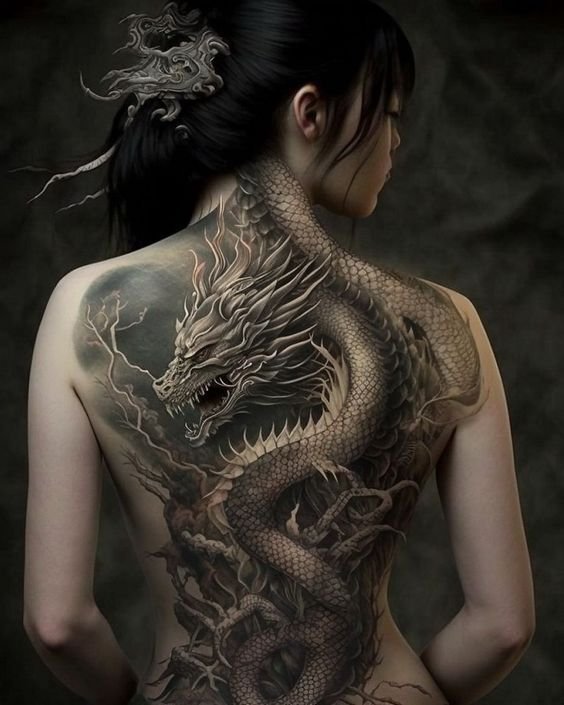
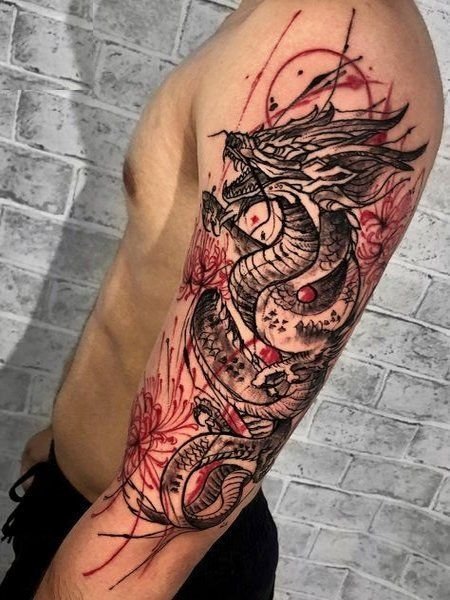
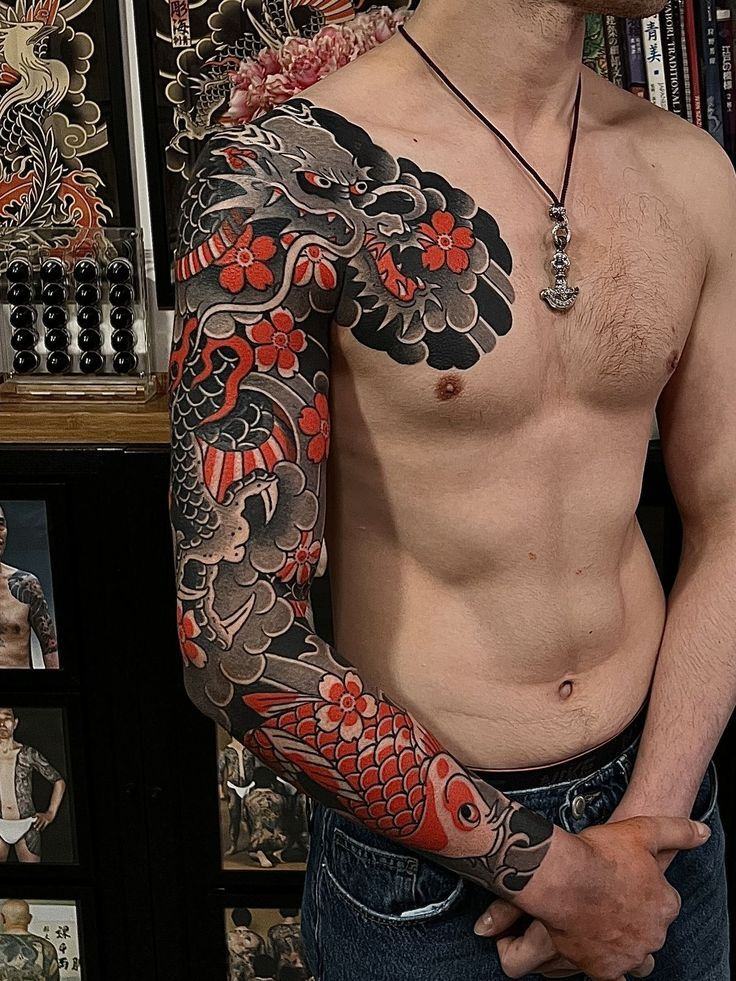
- Dragon - connected with strength, wisdom, protection and inner power. In Japanese tattoo art, dragons are also linked with water, movement and the ability to control force without losing balance.
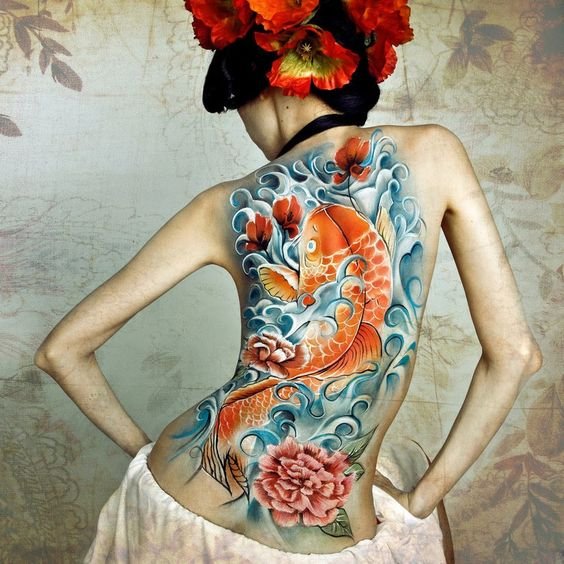
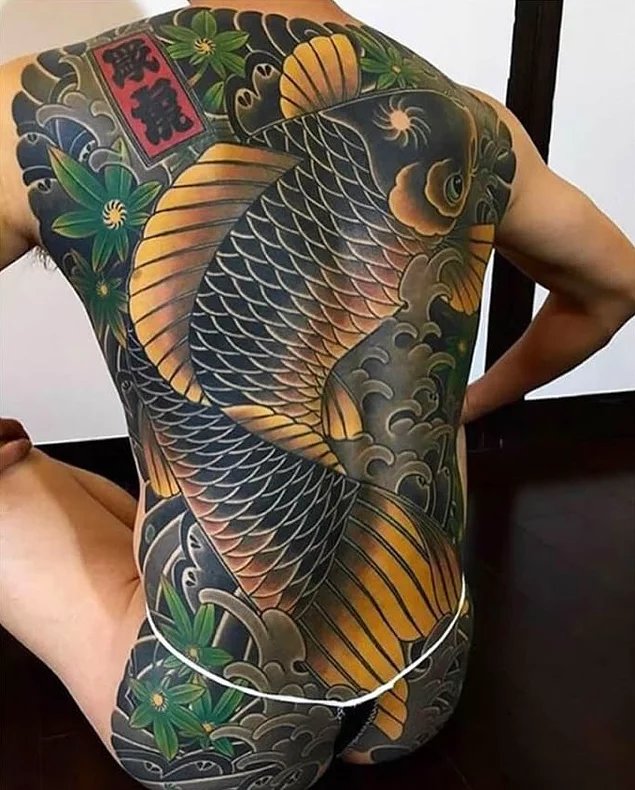
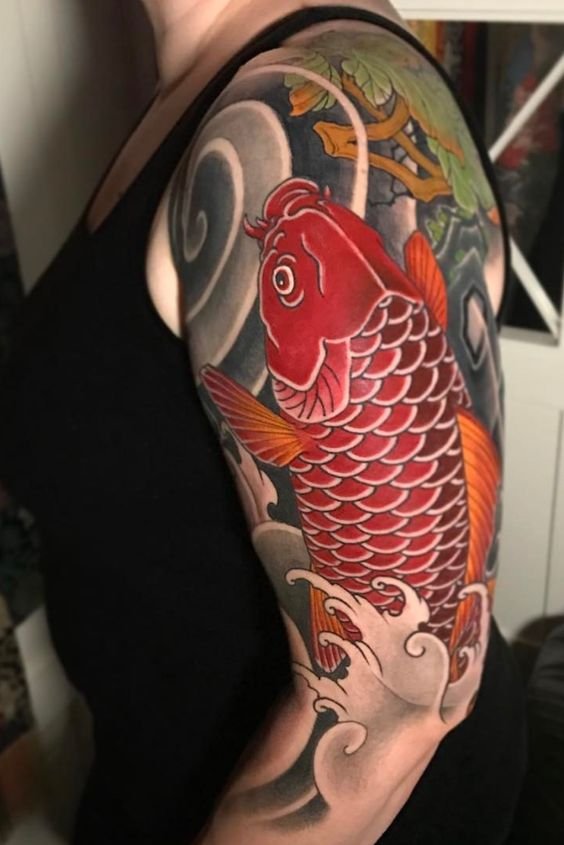
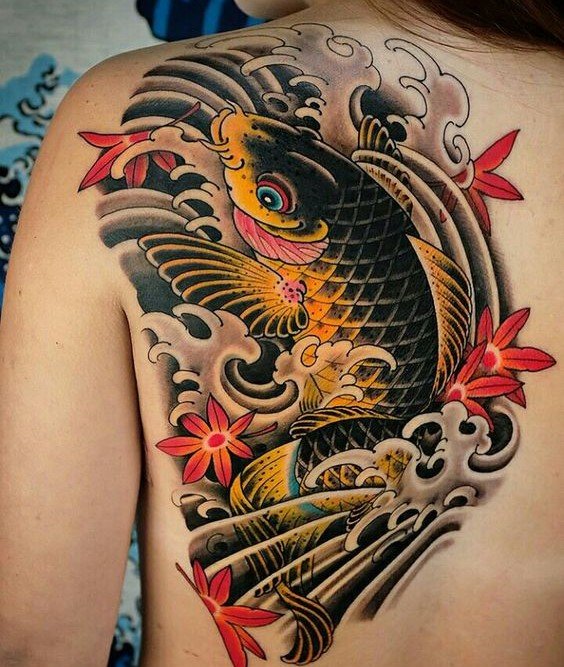
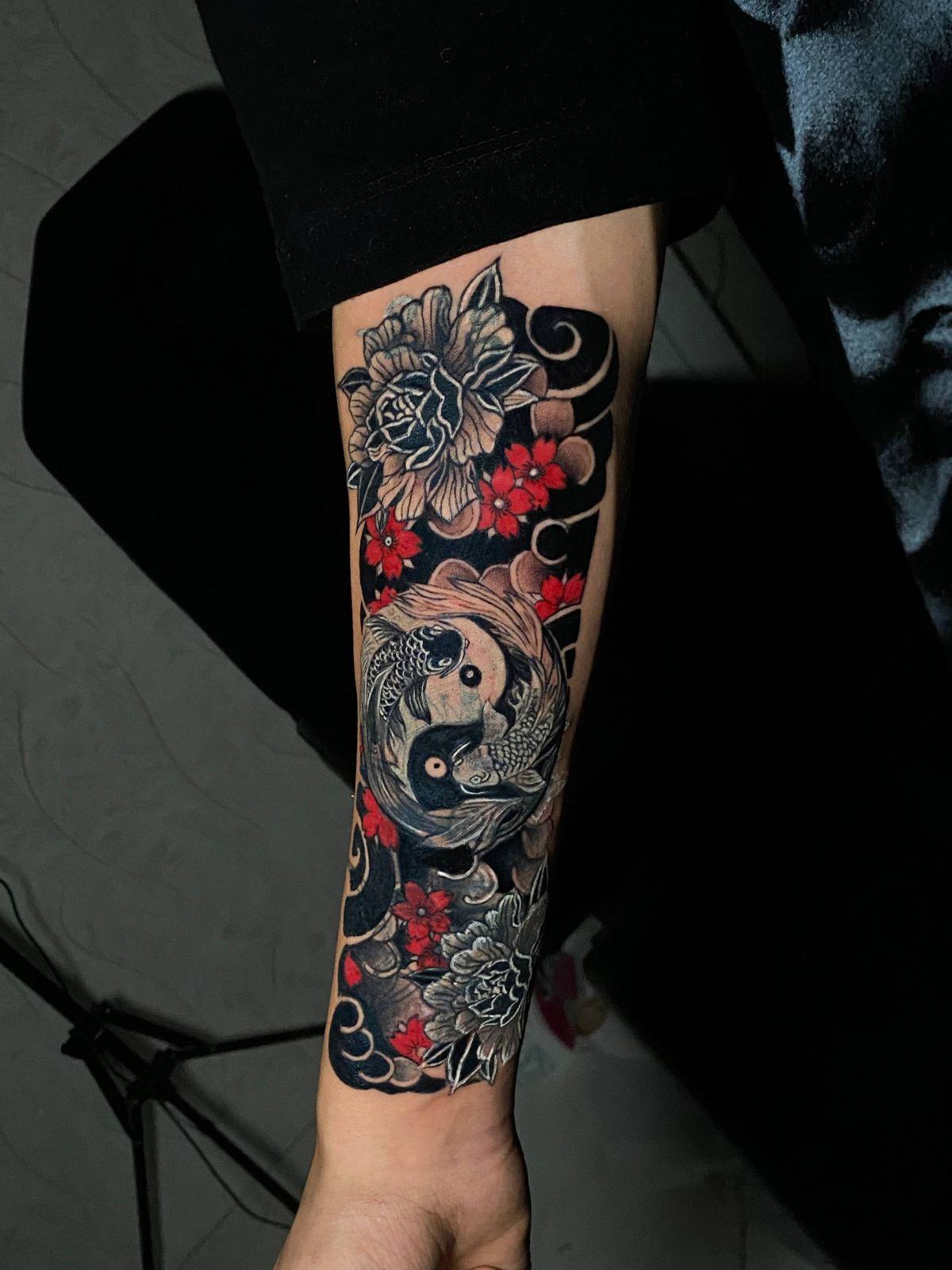
- Koi Carp - represents perseverance, ambition and the ability to overcome difficulties. The image is often associated with the story of a koi swimming upstream and transforming into a dragon.
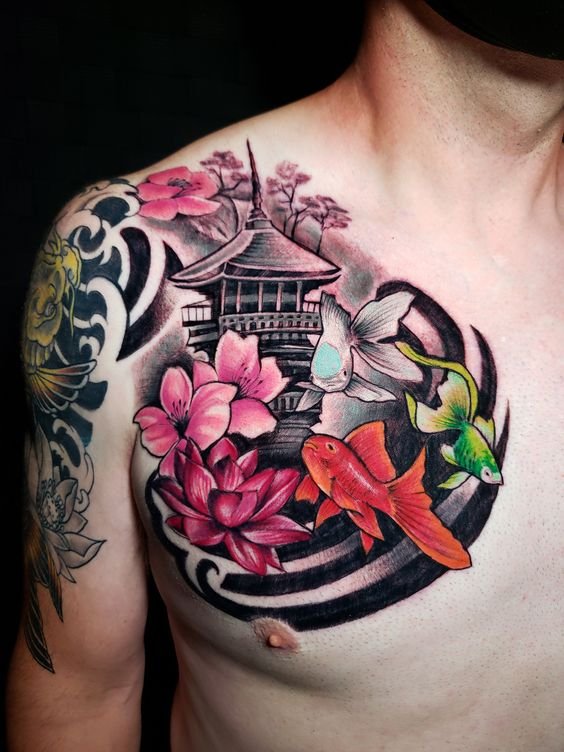
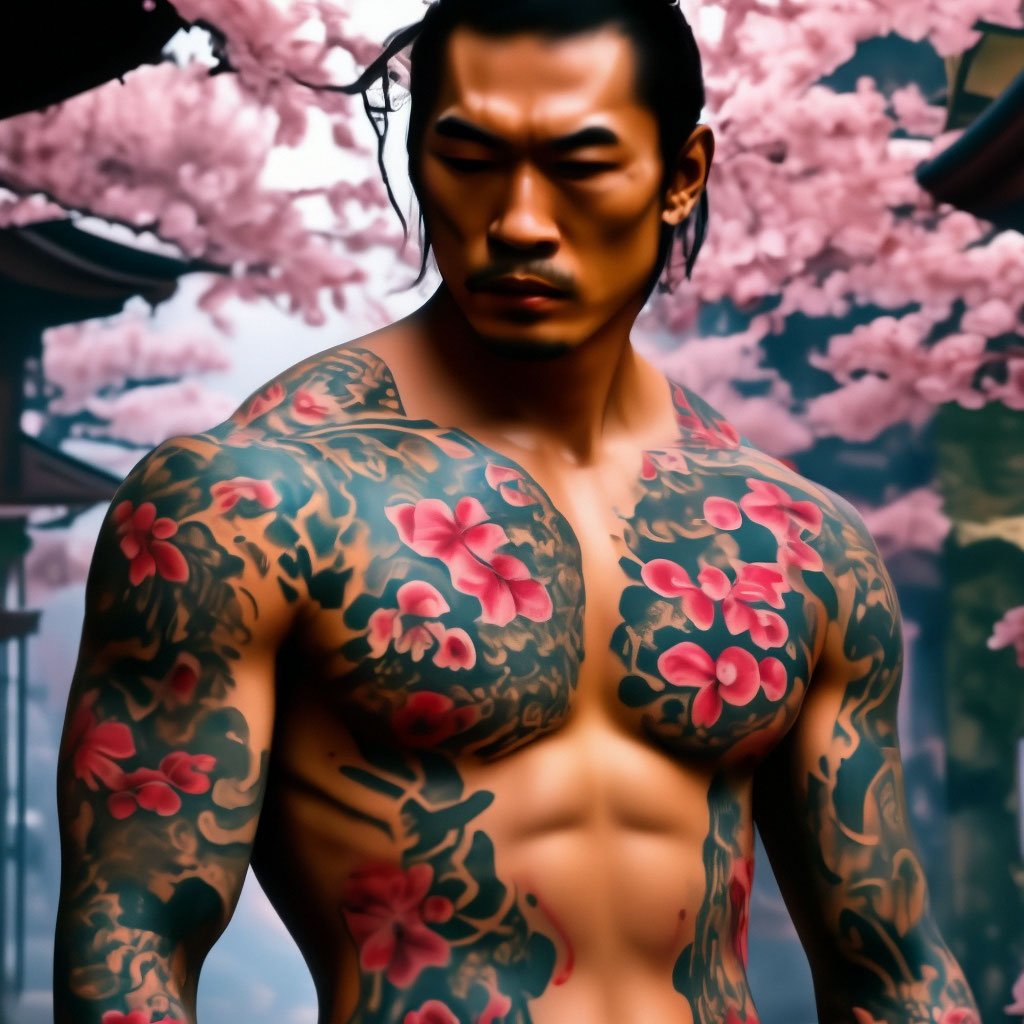
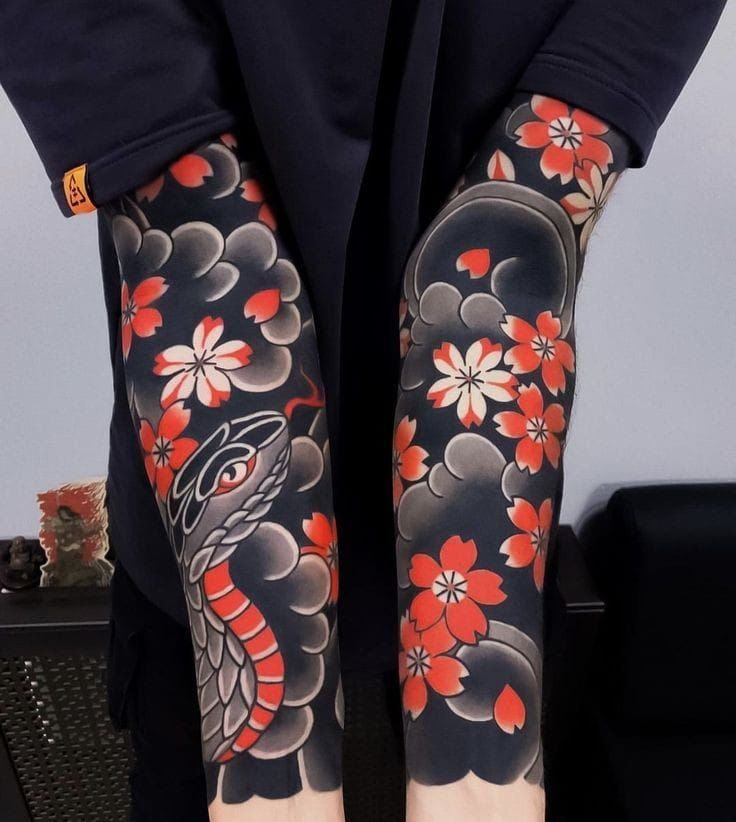
- Cherry Blossoms - symbolize beauty, impermanence and the short nature of life. Sakura can soften a large composition and add a more poetic meaning to a powerful design.
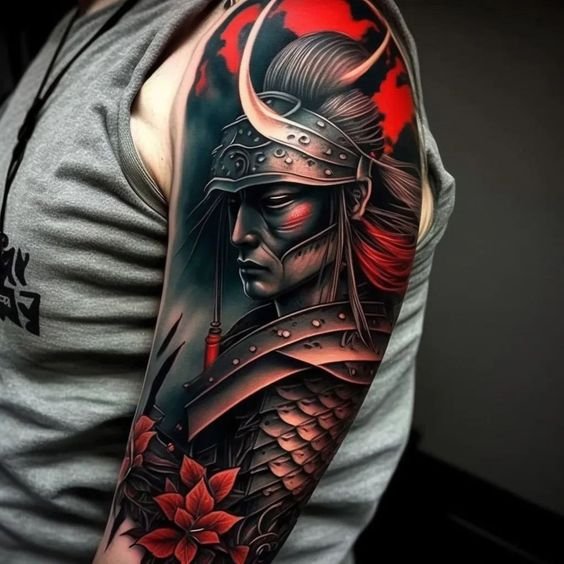
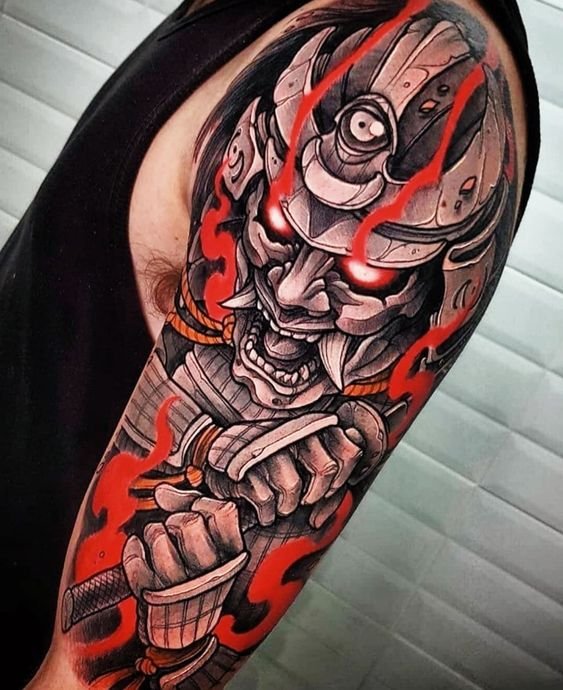
- Samurai - reflects discipline, loyalty, honor and readiness to defend personal beliefs. This element often gives the sketch a stronger historical and warrior-like character.
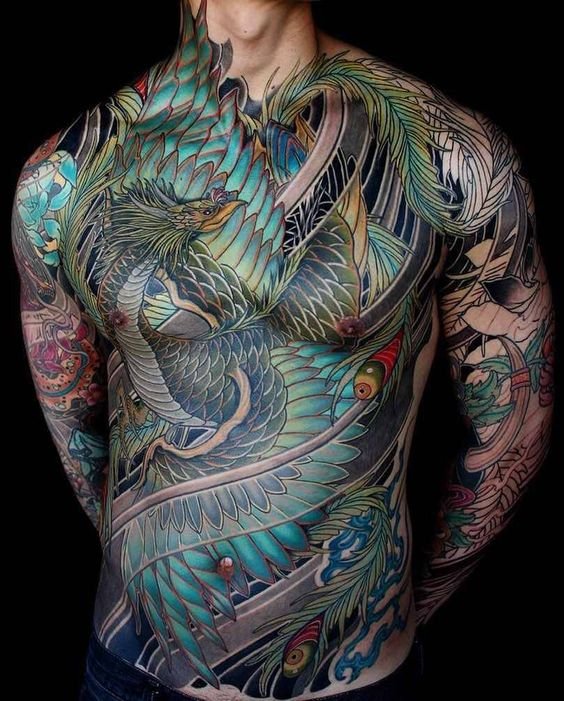
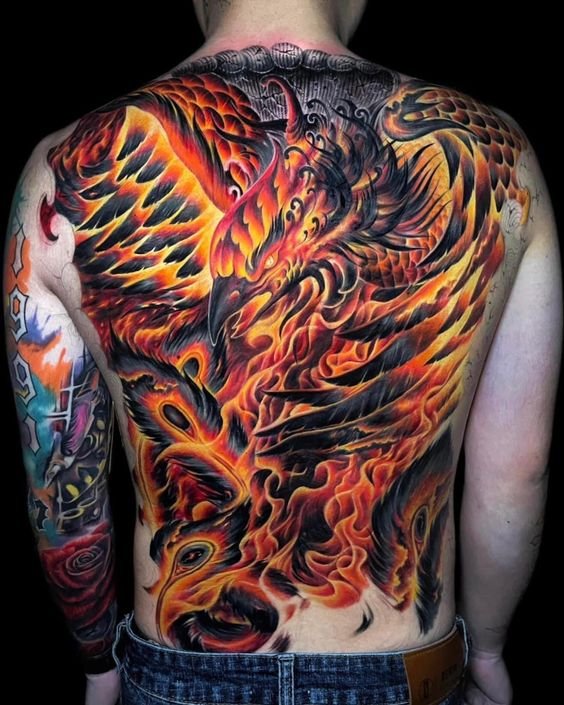
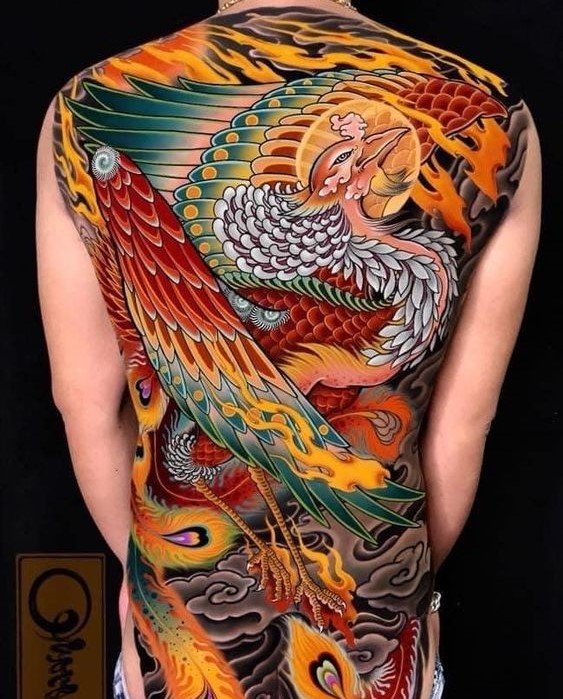
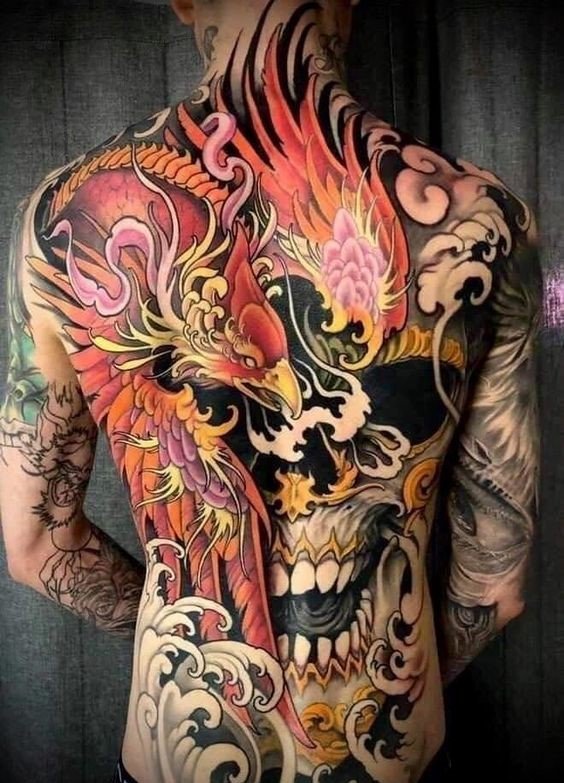
- Phoenix - stands for rebirth, renewal and the ability to rise again after difficult periods.
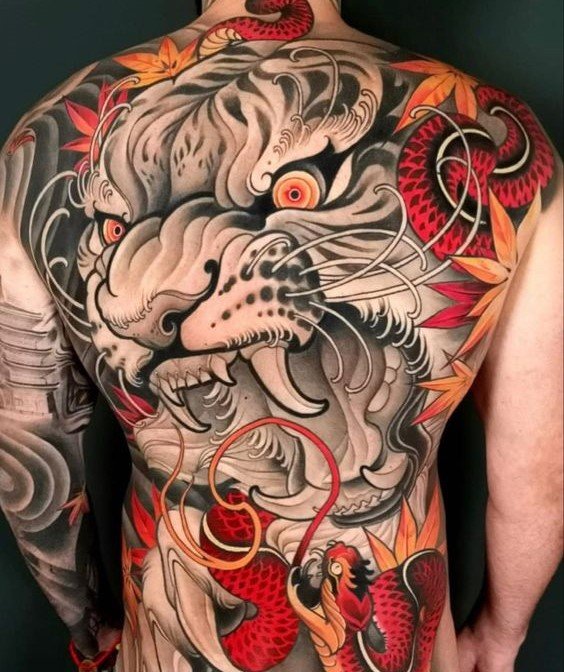
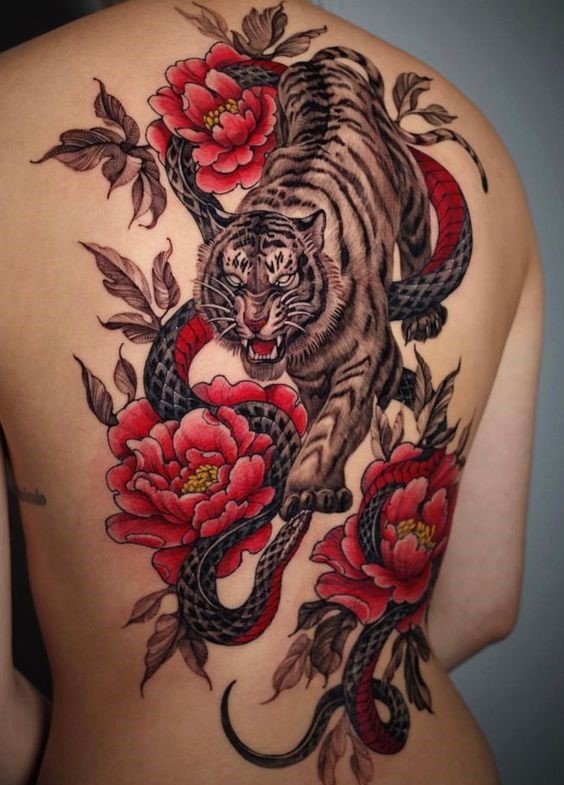
- Tiger - represents courage, energy and protection from misfortune. In large Japanese compositions, it often adds movement and visual tension.
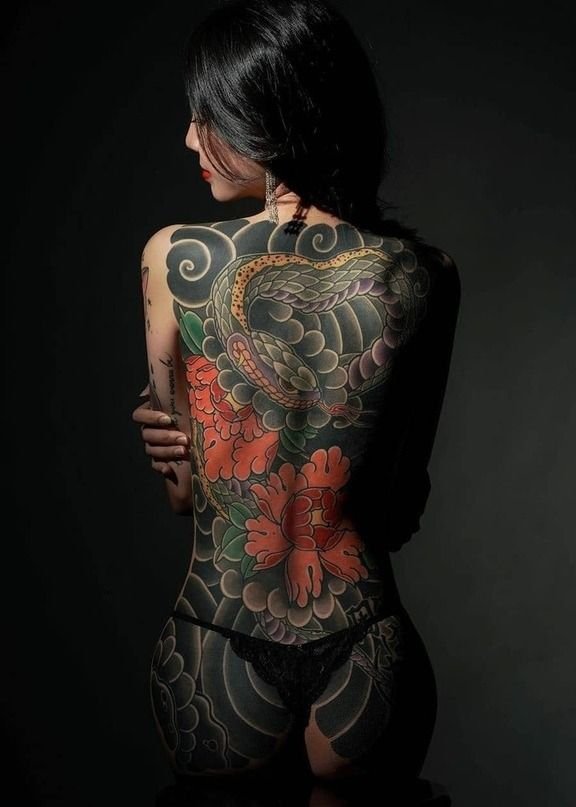
- Waves and Clouds - help connect the main elements and create rhythm in the design. They also guide the eye, so the viewer sees one flowing composition instead of separate symbols placed next to each other.
A strong sketch usually combines only the elements that truly support the main idea. Too many symbols can make the composition overloaded, so the meaning should be clear before the design is developed.


Yakuza Tattoo Style in Modern Sketches
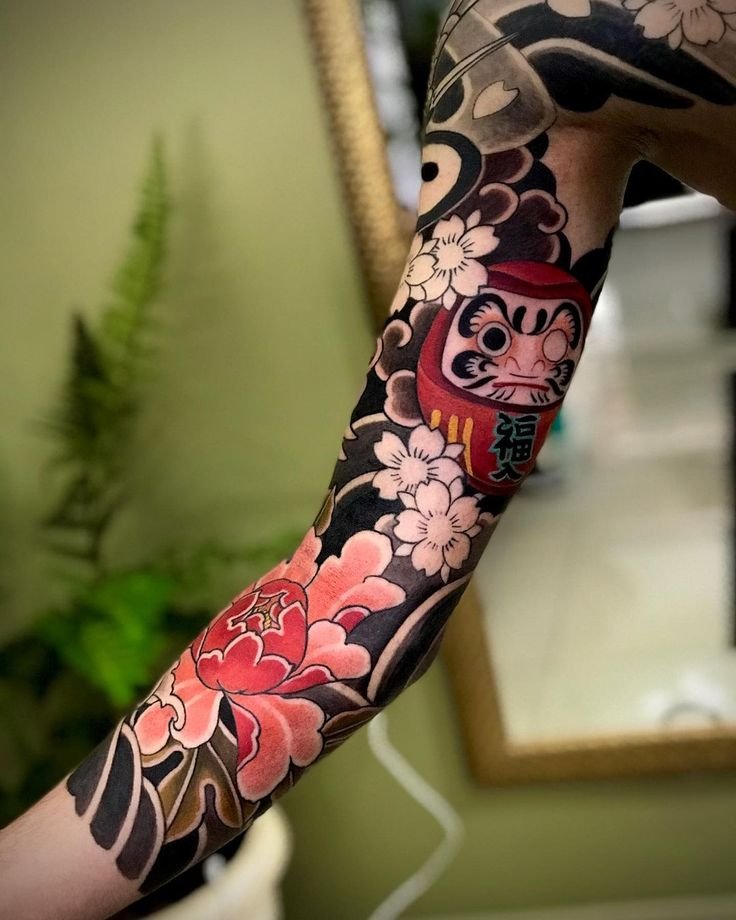
The yakuza tattoo style is usually recognized by large compositions, strong movement, dense details and traditional Japanese visual rhythm.
Even when the sketch is adapted for a modern client, the design should still feel structured, balanced and connected to the original aesthetic.
At the start of a yakuza tattoo design, the artist needs to define the scale, main motif, background and level of detail. A full back, sleeve or chest composition allows more movement and storytelling, while a smaller fragment needs cleaner shapes and fewer decorative elements.
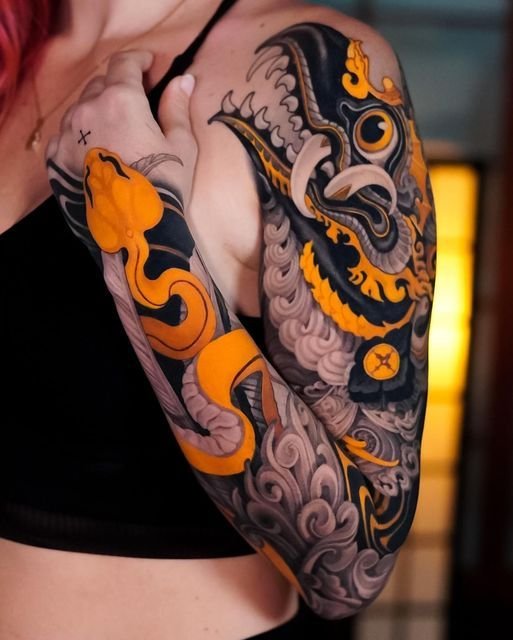
Flow is one of the key details in Japanese-inspired design. If the dragon, koi, flowers, waves or clouds do not follow the body, the tattoo can look flat even when the drawing itself is detailed. Background elements are not just decoration - they control movement and help the composition work with the anatomy.
Color also changes the final effect. Traditional-style tattoos often use deep blacks, red accents, blue waves, warm skin tones and strong contrast. Black and grey versions can look more restrained, serious and graphic, especially when the focus is on texture, shading and composition.
Large-scale tattoo compositions are usually planned over several sessions because of their size and detail. This is why flow, placement and future extensions should be discussed before the first session starts.


Yakuza Dragon Tattoo Designs
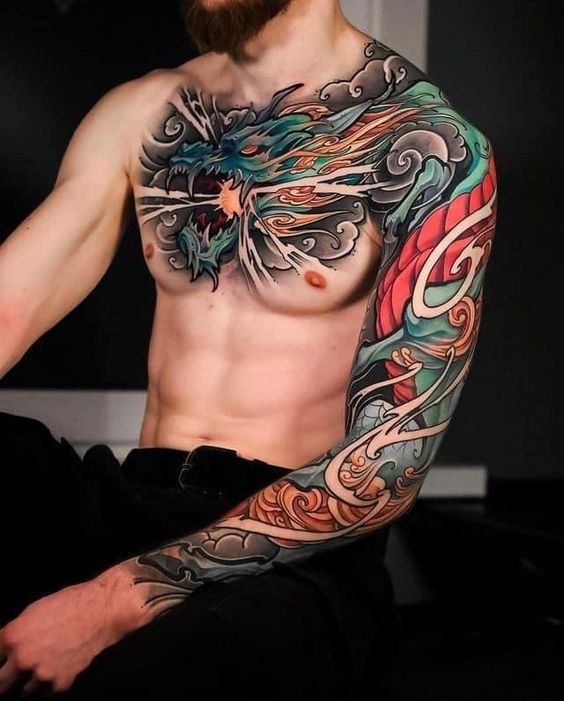
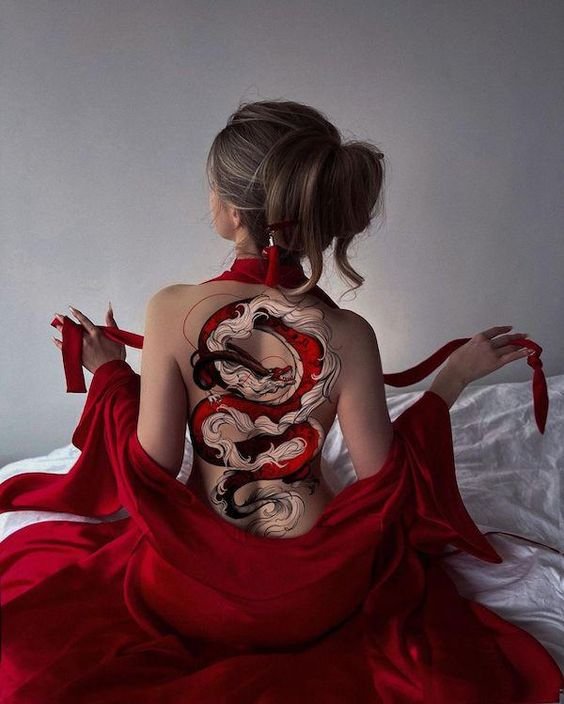
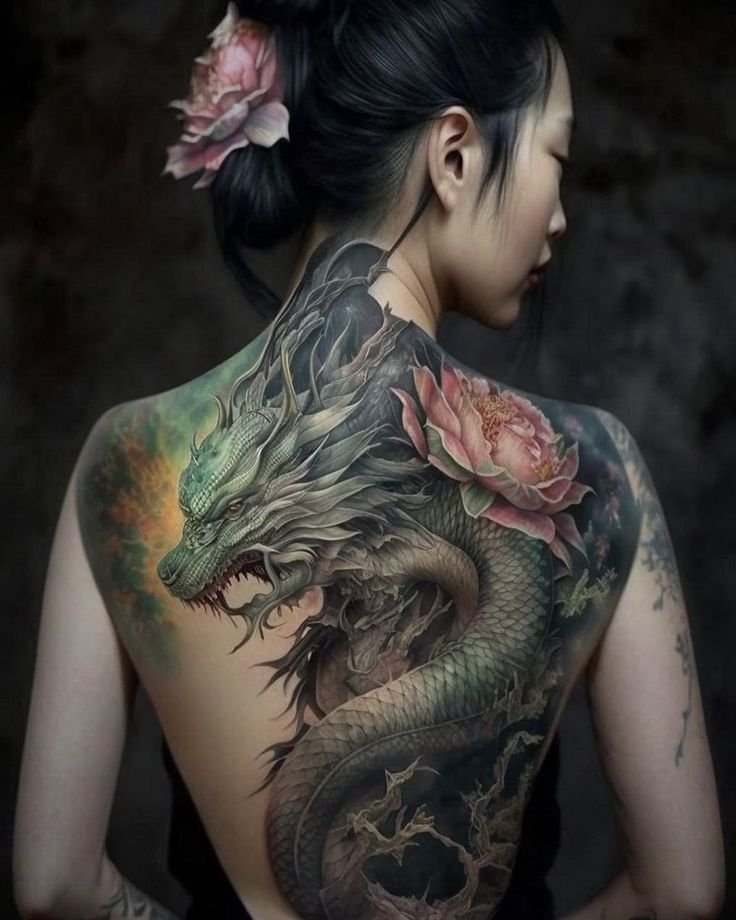
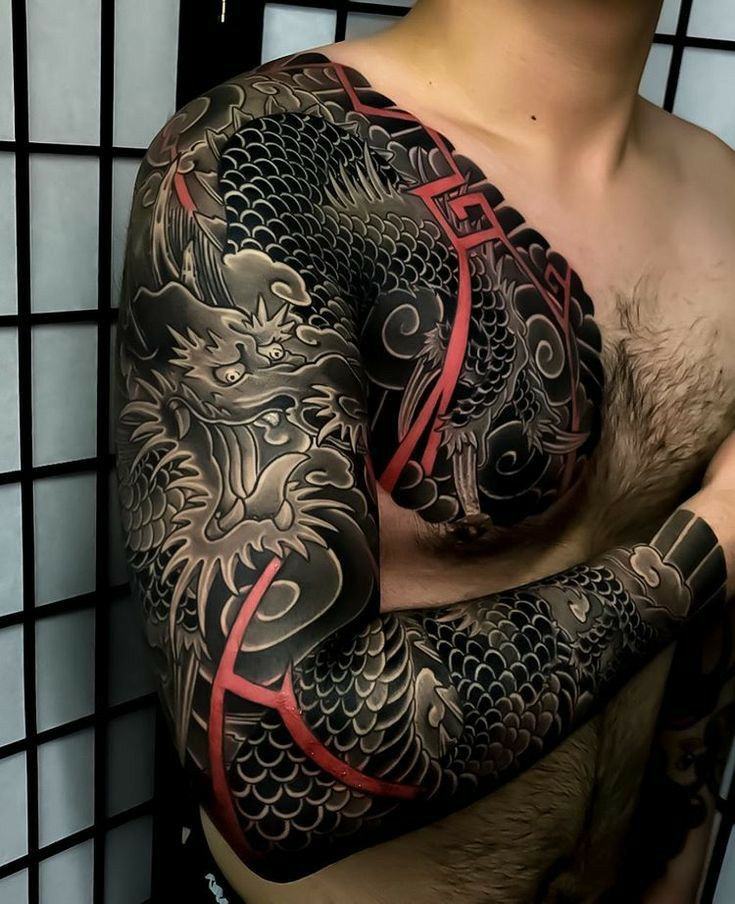
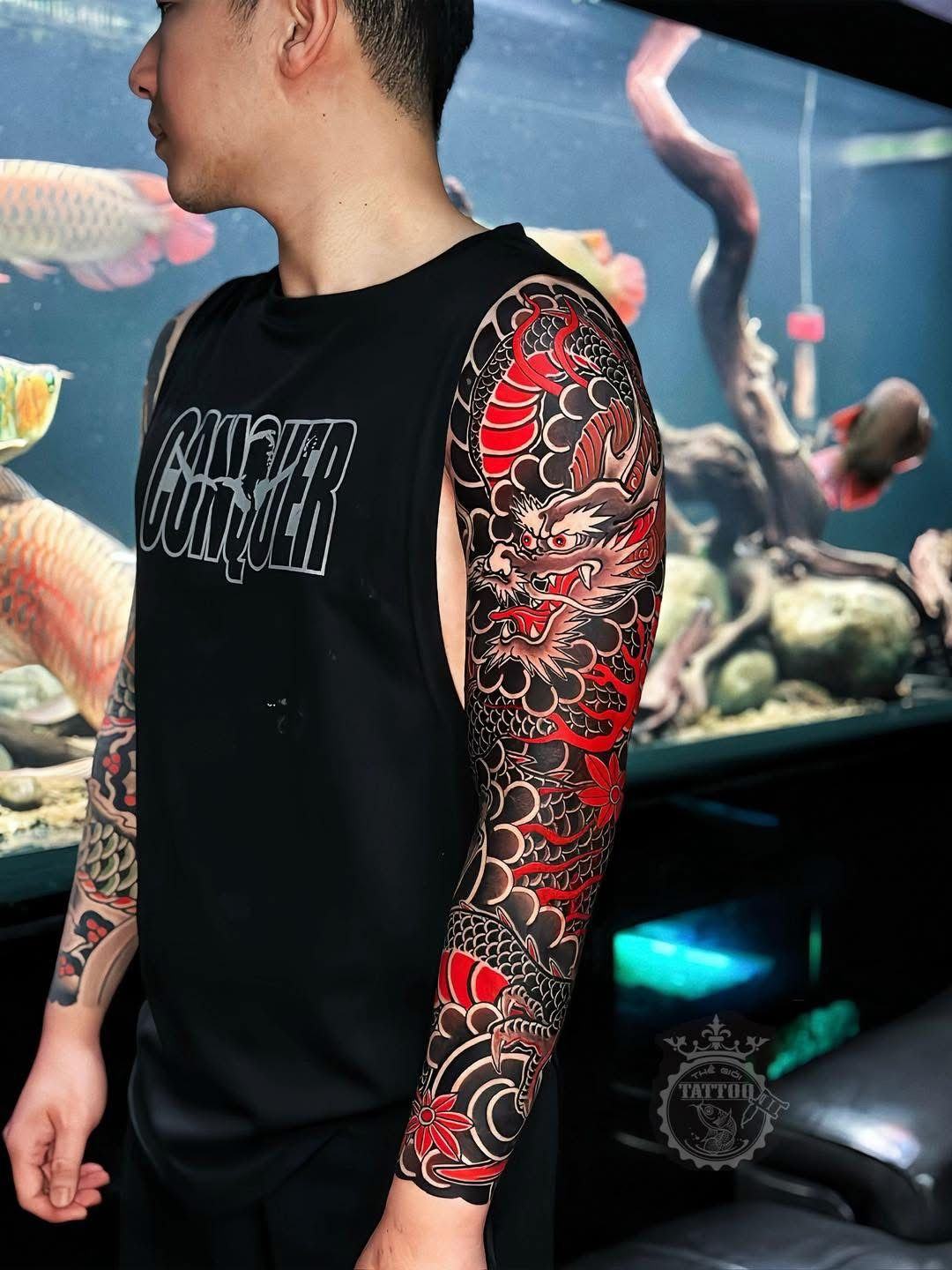
A yakuza dragon tattoo is one of the strongest visual directions in Japanese-inspired tattoo art.
The dragon can represent power, wisdom, protection, movement and control over inner strength. It usually works best when the design has enough space for the body, claws, scales, clouds or waves.
The composition can be dramatic or more restrained. A large dragon across the back, chest or sleeve allows the artist to show movement and detail, while a smaller sketch needs cleaner lines and fewer background elements. In sleeve adaptations, the shoulder often becomes a natural anchor point because it helps the dragon’s body move into the arm without breaking the flow.
Color also changes the mood. Red accents can make the image more intense, blue and grey tones can connect it with water and movement, while black and grey gives the dragon a more serious and graphic look. The main goal is to keep the design readable and powerful without overloading it with too many symbols.


Arm, Forearm and Hand Placement Ideas
Placement is especially important for large Japanese-style compositions.
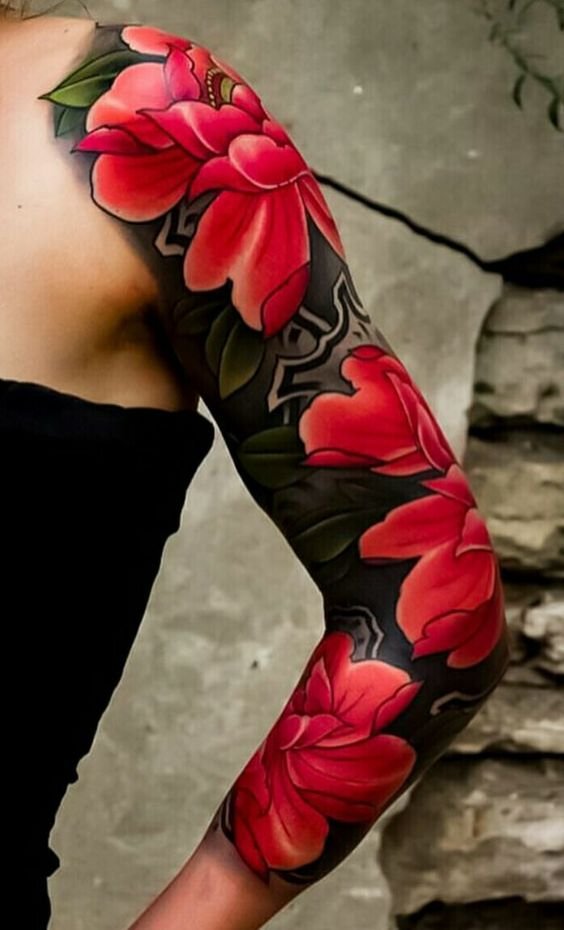
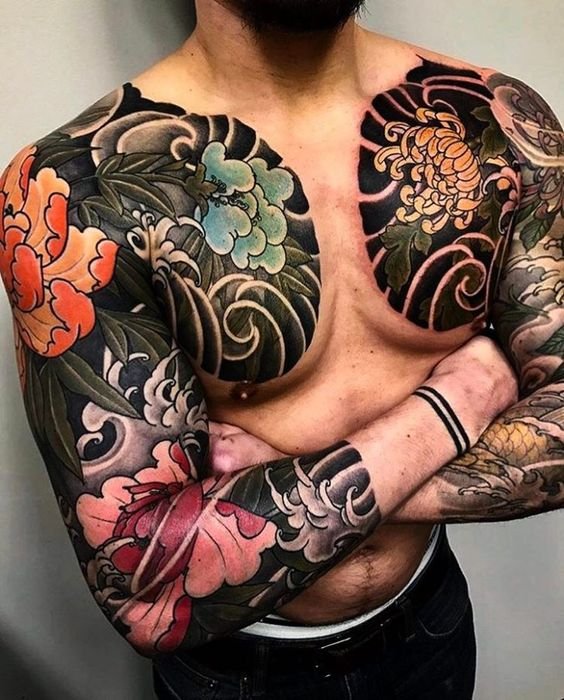
A yakuza arm tattoo can follow the natural shape of the shoulder and upper arm, making it a good option for flowing motifs, background movement and larger visual stories.
A yakuza forearm tattoo is usually more visible and works better with vertical compositions. The design should be clear from different angles, especially if it includes a face, claws, waves or detailed shading. This area is suitable for a strong single motif or a smaller fragment of a larger Japanese-inspired idea.
A yakuza hand tattoo needs even more careful planning. The hand has limited space, visible movement and faster visual wear than many other areas. For this reason, bold shapes, strong contrast and simplified details usually work better than complex miniature scenes.
For larger projects, the arm can also become part of a sleeve. In that case, the artist should plan not only the main image, but also the background, transitions and how the design connects with the shoulder, chest or back.


FAQ
- What Does a Yakuza Tattoo Mean?
- The search for yakuza meaning in tattoo art usually leads to Japanese tradition, identity, endurance, loyalty, discipline and symbolic storytelling. In a modern sketch, these ideas should be treated with respect and adapted carefully, not copied for decoration alone.
- What Does a Yakuza Dragon Tattoo Mean?
- A dragon usually represents strength, wisdom, protection and inner power. In Japanese tattoo art, it is often connected with water, movement and the ability to control force. The final meaning depends on pose, color, background and composition.
- What Is the Yakuza Tattoo Style?
- This style is usually recognized by large compositions, strong movement, dense details, bold outlines and traditional Japanese motifs. Waves, clouds or wind often help connect the main elements and create movement across the body.
- Where Do Japanese-Inspired Tattoos Look Best?
- Large designs often work well on the back, chest, shoulder, sleeve or thigh. Smaller fragments can be placed on the forearm or upper arm, but the design needs enough space to keep the main elements clear.
- Can This Style Work as a Hand Tattoo?
- Yes, but it should be simplified. A hand tattoo has limited space, so bold shapes, strong contrast and fewer small details usually work better than complex scenes.
- What Should You Check Before Choosing This Design?
- It is important to understand the meaning of the chosen elements, the scale of the composition, the placement and the cultural background of the style. A good sketch should follow the body, stay readable over time and look balanced from different angles.


Sketches and Gallery
The gallery can help you understand how different yakuza tattoo designs work as real tattoo references, not just as separate images.
Compare Japanese-inspired sketches by scale, movement, contrast, background, placement and the way the main motif follows the body.
Not every reference works well as a tattoo. Some Pinterest-style images look impressive on screen, but do not translate well to skin because they ignore body flow, aging, contrast or the space needed for details.
Some sketches focus on dragons, koi, tigers or samurai, while others use waves, clouds, flowers or masks to build a larger visual story. A full back piece, sleeve, forearm design or smaller fragment will all require a different level of detail.
Use the sketches as inspiration, not as a direct copy. At VEAN TATTOO, the artist can help adapt the chosen direction into a personal design that respects the style, fits the body and stays visually clear.