Zeus Tattoo: Meaning, Designs
and Mythological Ideas
 Anna van Dijk
 Paulina de Vries
A Zeus tattoo is one of the strongest mythological motifs in tattoo art.
The image is connected with thunder, authority, justice and the power of the sky. In ancient Greek mythology, Zeus was the ruler of Olympus, the god of thunder and the figure who watched over order among gods and people.
This design is often chosen by those who want a tattoo with a clear central image. A stern face, lightning, clouds, an eagle or a statue-inspired composition can make the motif dramatic and recognizable without adding too many details. Depending on the style, the same idea can feel realistic, graphic, classical or dark.
The symbol is not only about physical power. It can also speak about responsibility, discipline, control, protection and the ability to make difficult decisions. That is why the image works well both as a bold visual statement and as a more thoughtful mythological design.

 Create a sketch in the VEAN TATTOO AI generator


Meaning and Symbolism
The meaning of this motif is usually built around authority, strength and order.
Zeus was not simply a powerful god. He was associated with judgment, balance, thunder and the ability to control forces that others could not.
Key meanings include:
- Power and authority
- The image of the Greek god often represents leadership, confidence and the ability to stand firmly in difficult situations. In tattoo form, this meaning is strongest when the portrait looks calm, severe and monumental.
- Justice and responsibility
- In mythology, Zeus was connected with law, truth and punishment for broken oaths. This makes the design suitable for people who see strength not as aggression, but as the ability to act fairly and take responsibility.
- Lightning and control over chaos
- Lightning is one of the most recognizable details in this type of composition. It adds movement, energy and a direct connection to the sky. Visually, it can make the image more dynamic without changing the main idea.
- Protection and guardianship
- The motif can also suggest protection. A portrait combined with an eagle, clouds or temple elements may feel like a symbol of guidance, watchfulness and inner support.
- Wisdom and maturity
- Zeus tattoo meaning can also be quieter and deeper. A calm face, antique sculpture effect or soft shadows can show wisdom, patience and control rather than pure force.


Design Ideas
A good sketch should have one clear visual focus.
Zeus, lightning, an eagle, clouds and Greek architecture can all work well, but putting every symbol into one tattoo may make the composition too heavy. The strongest designs usually choose one main idea and support it with a few details.
Popular ideas include:
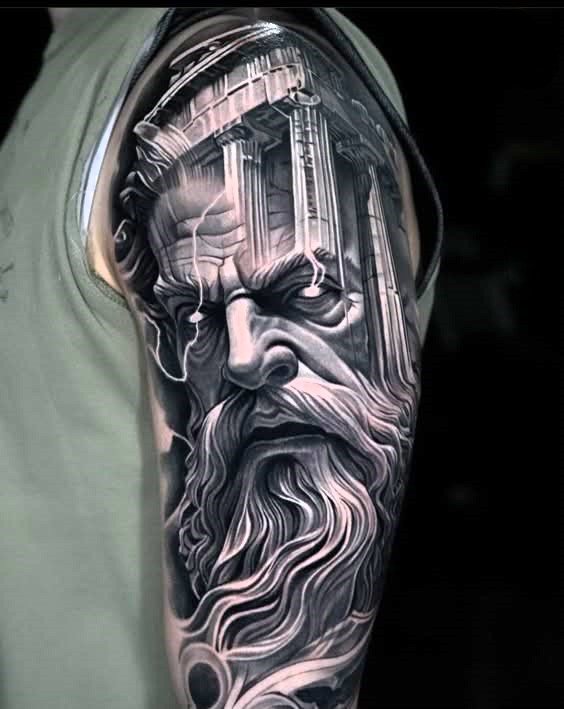
- Realistic portrait
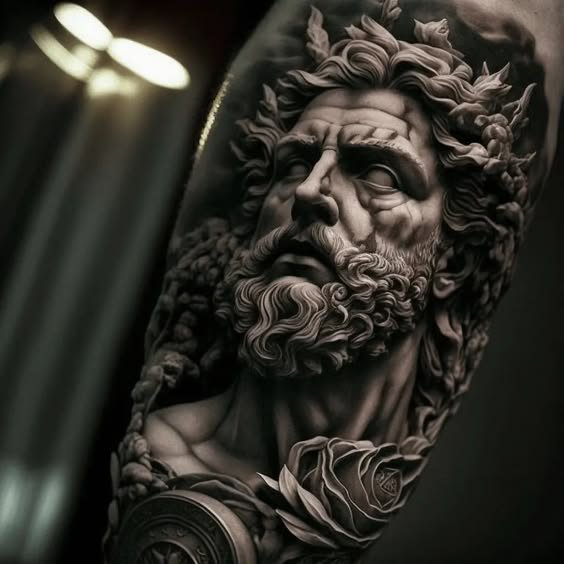
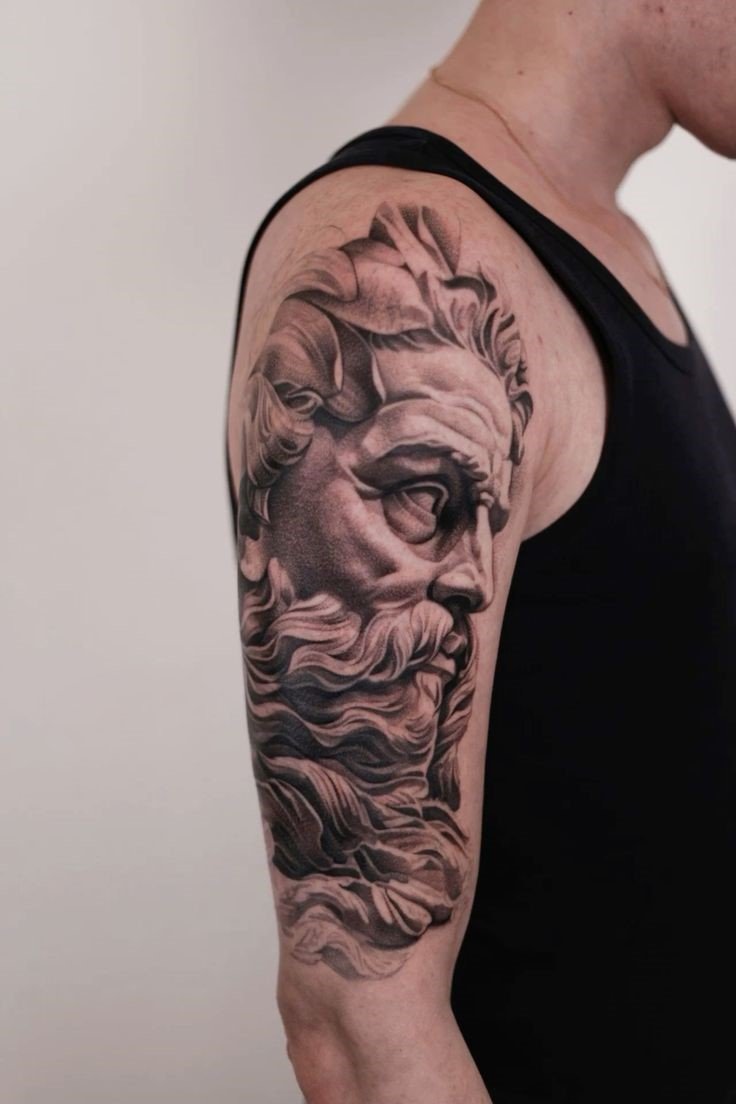
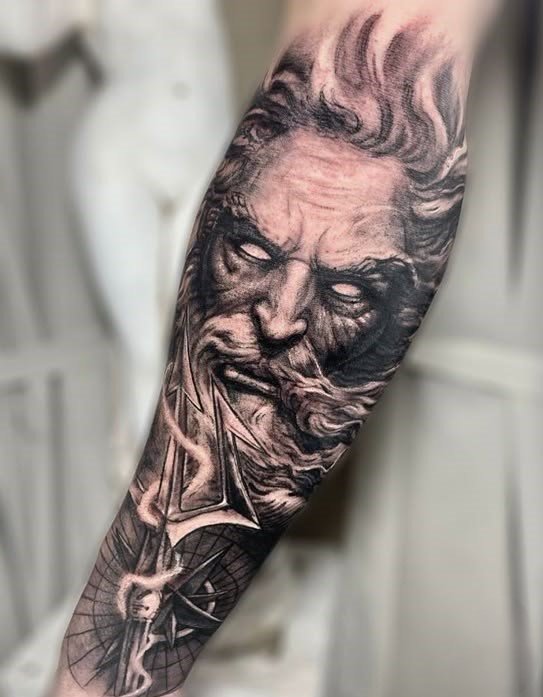
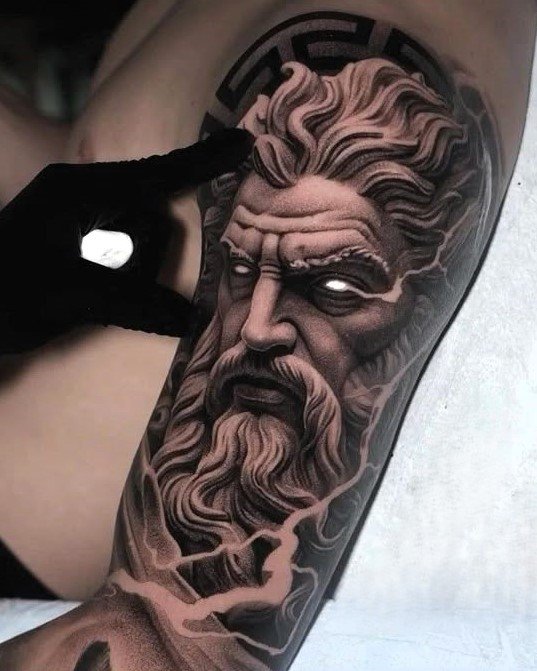
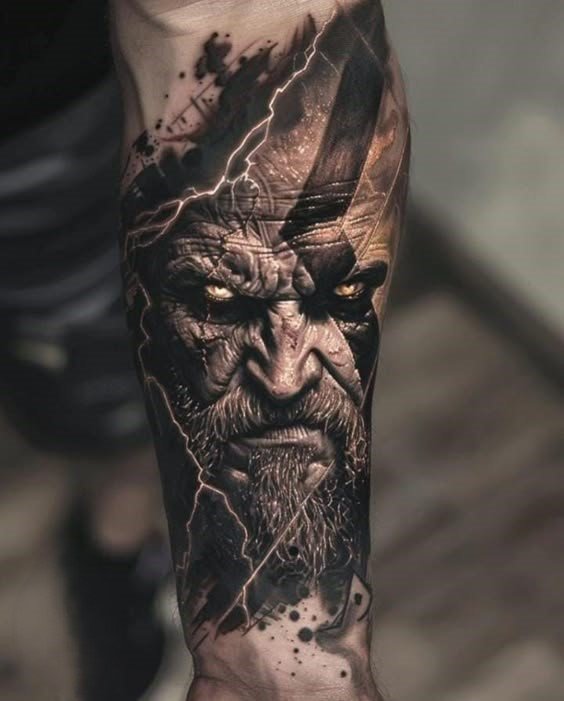
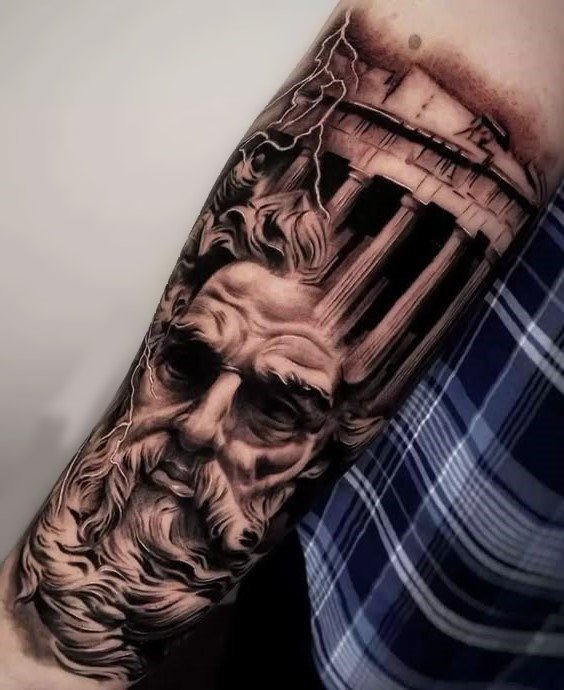
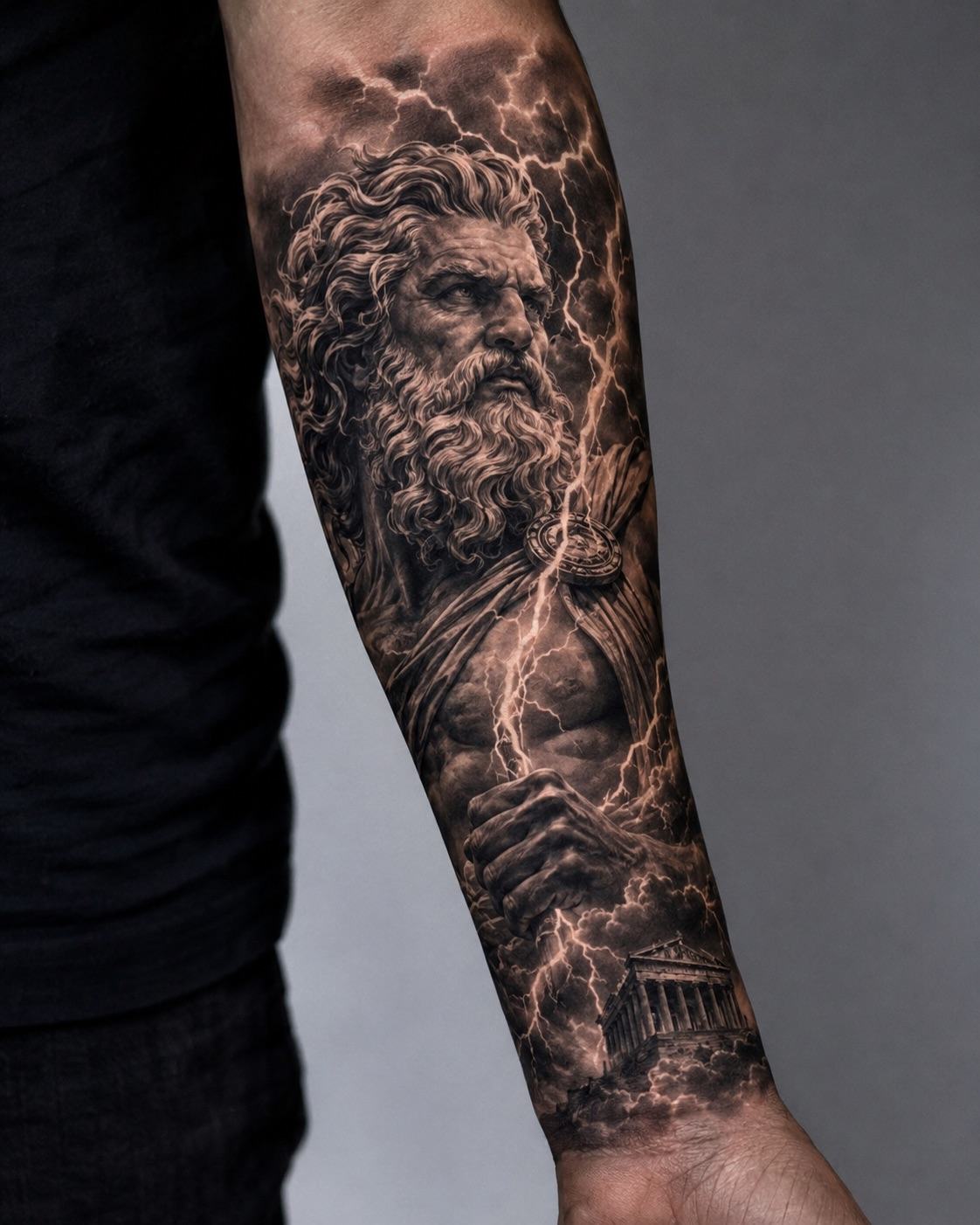
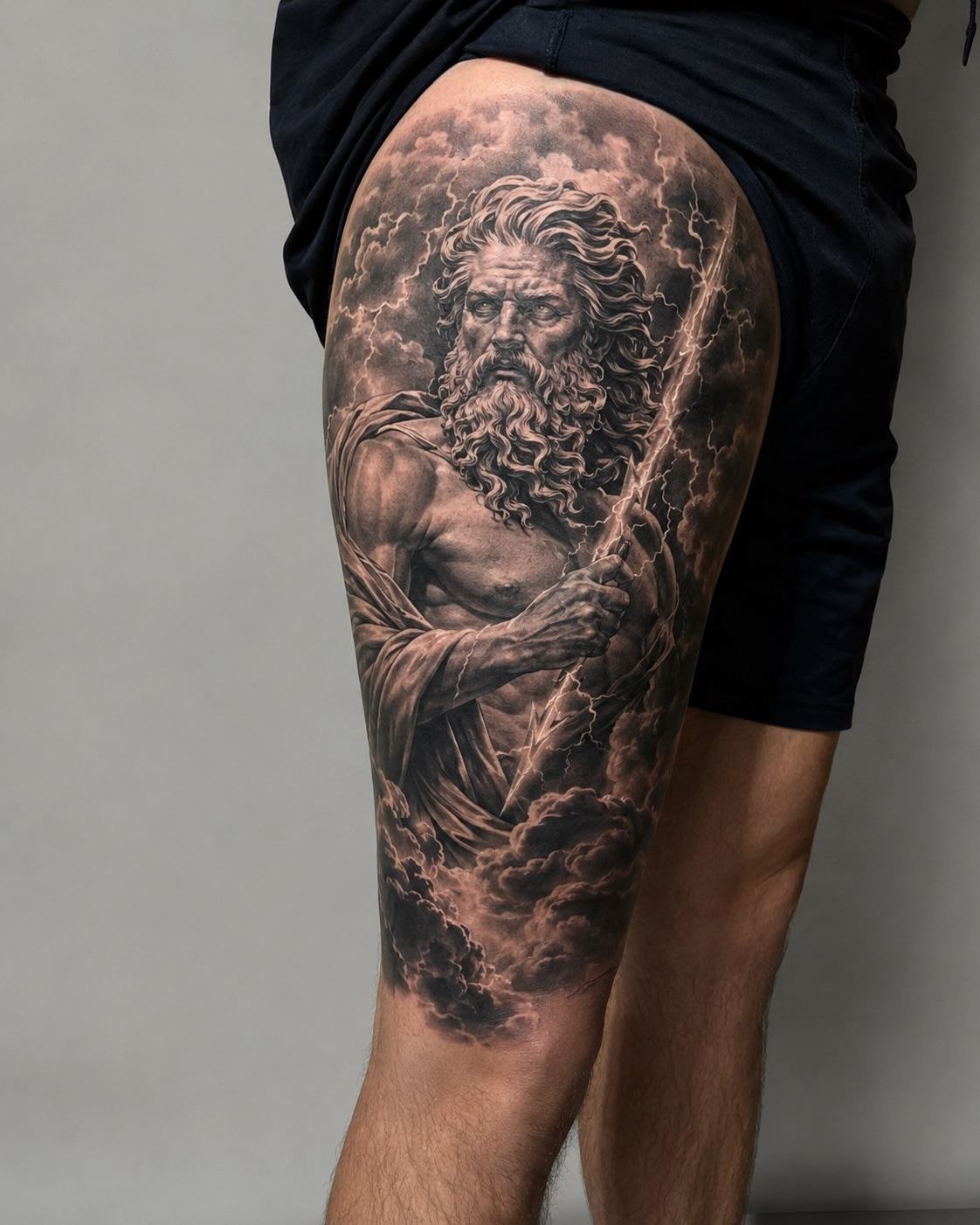
- A realistic portrait focuses on the face, beard, eyes and shadows. This option looks powerful because the expression carries most of the meaning. It works best in medium or large size, especially on the upper arm, chest, back or thigh.
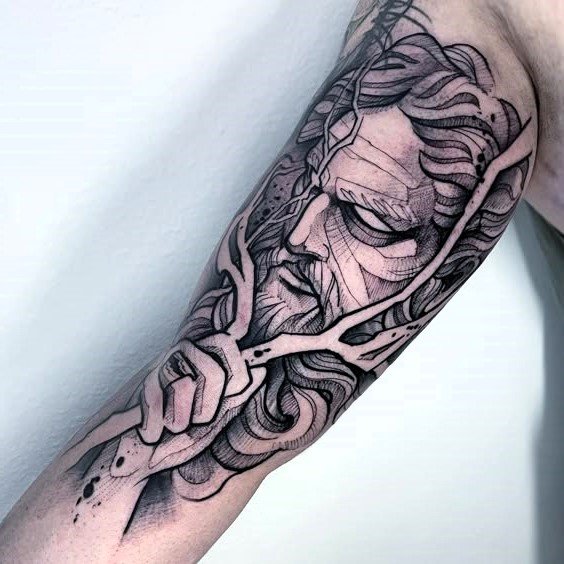
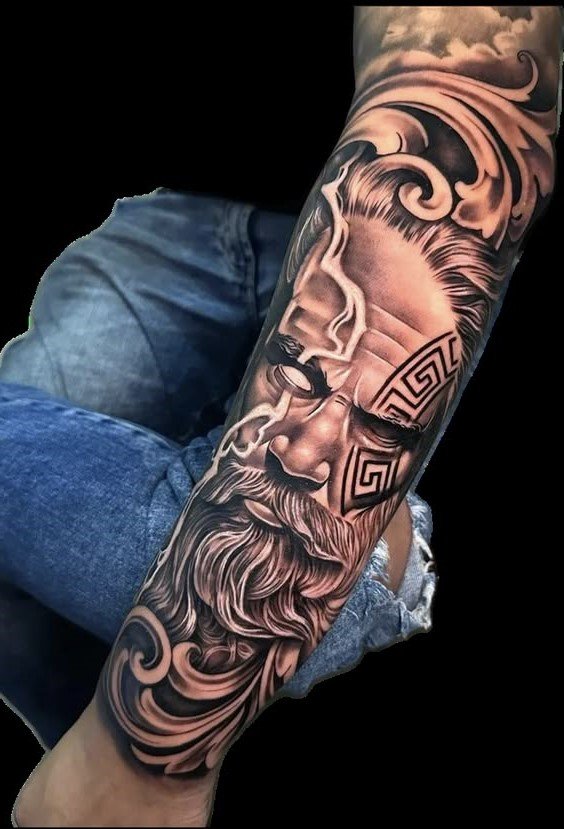
- Zeus with lightning
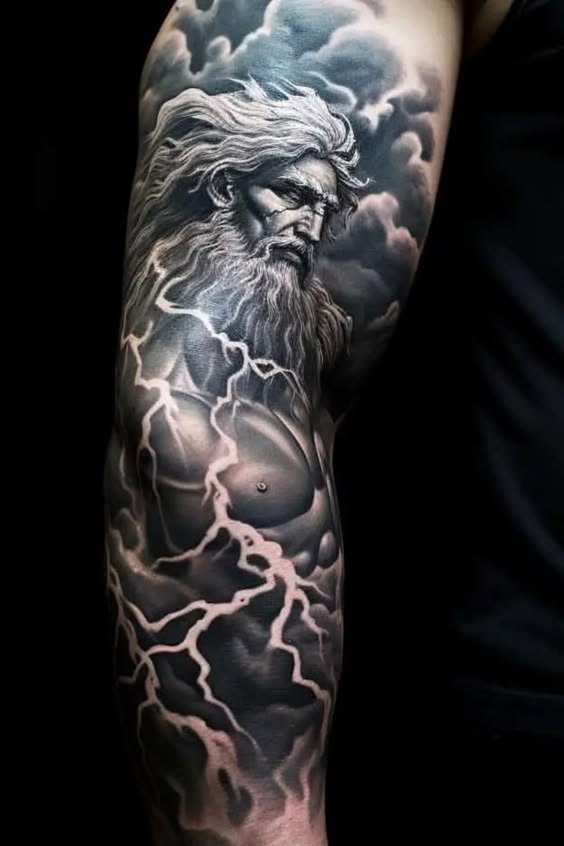
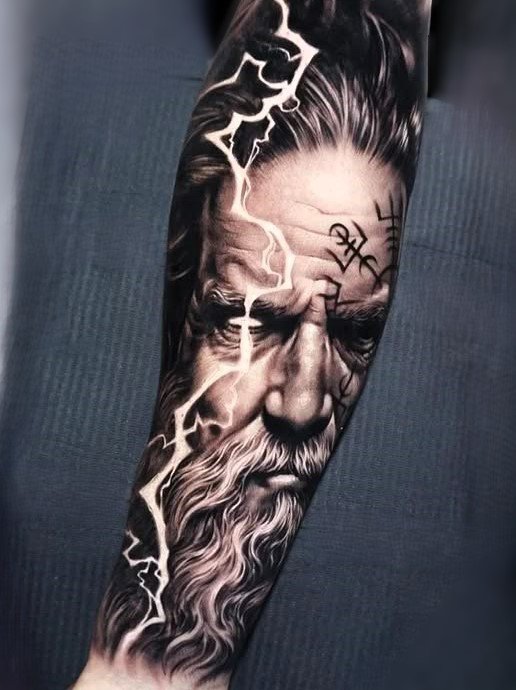
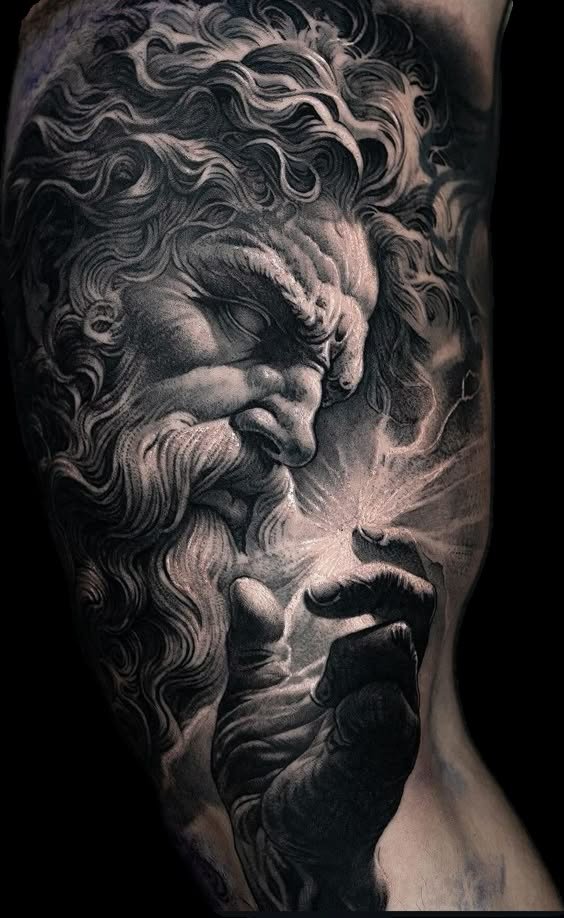
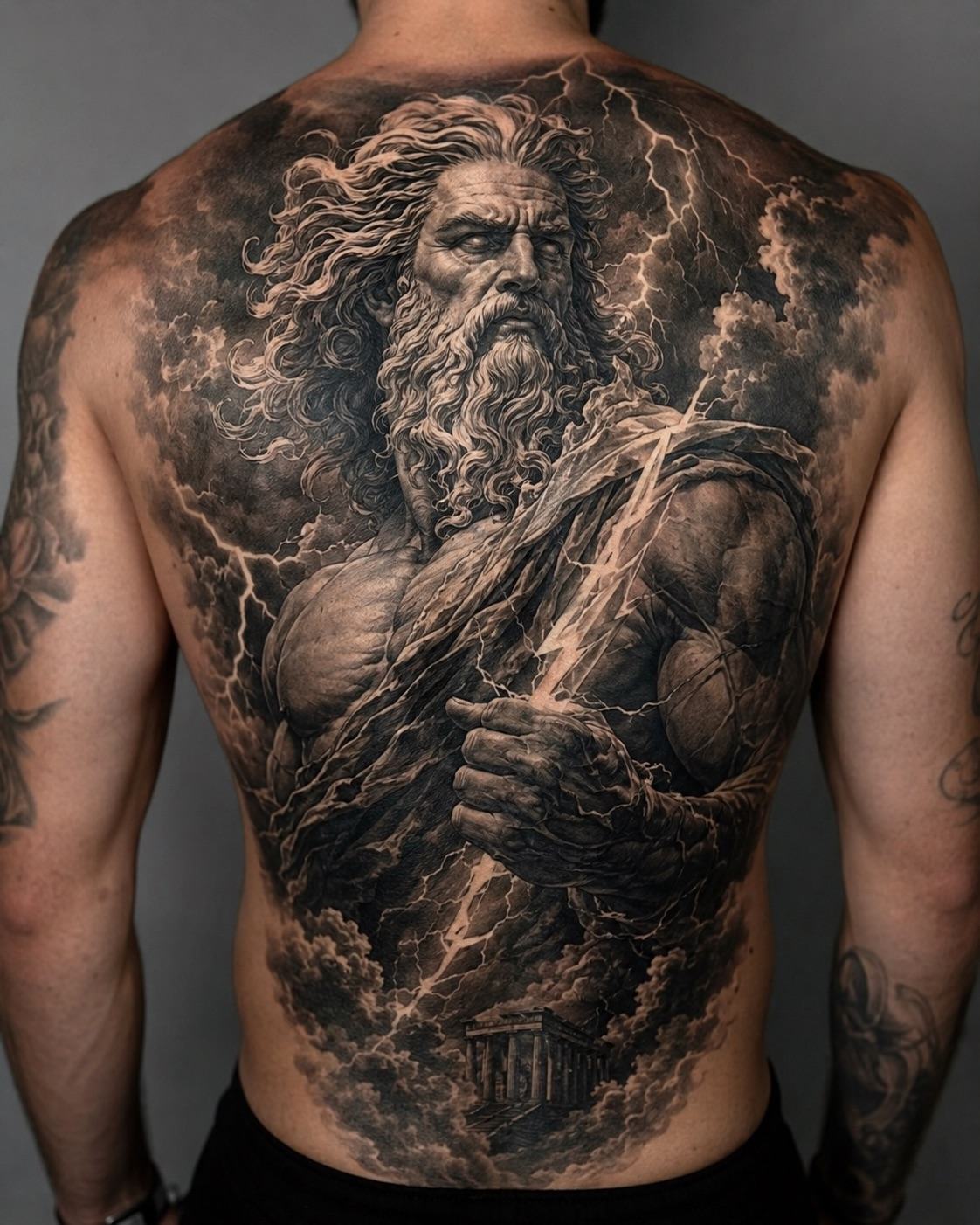
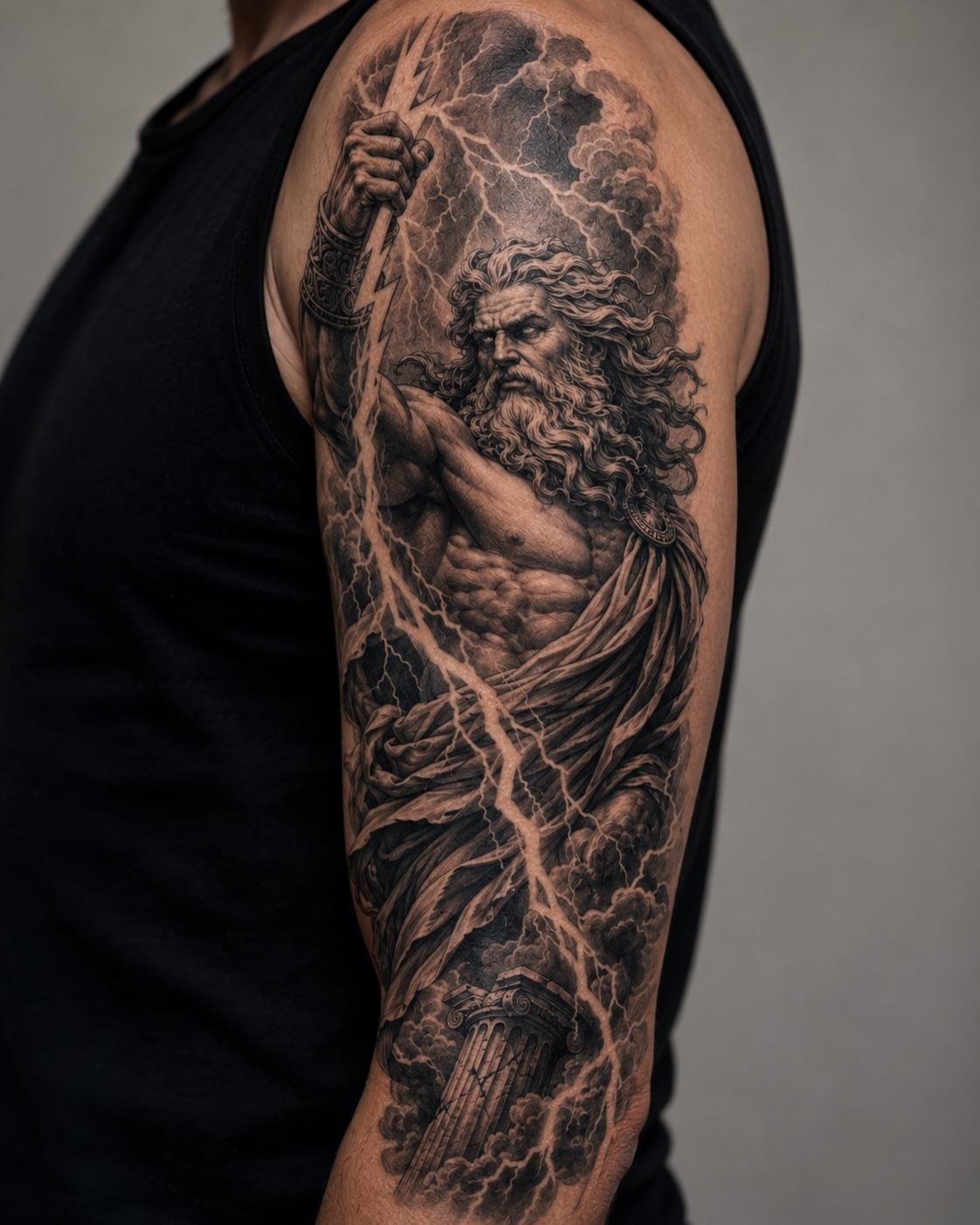
- A design with lightning feels more active and dramatic. The lightning can be held in the hand, placed behind the figure or used as a sharp background element. This idea suits people who want the tattoo to show energy, action and control.
- Eagle and sky elements
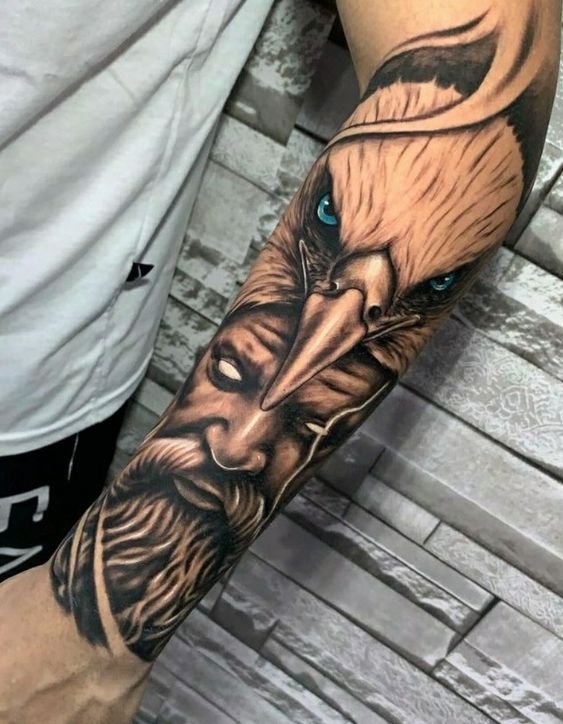
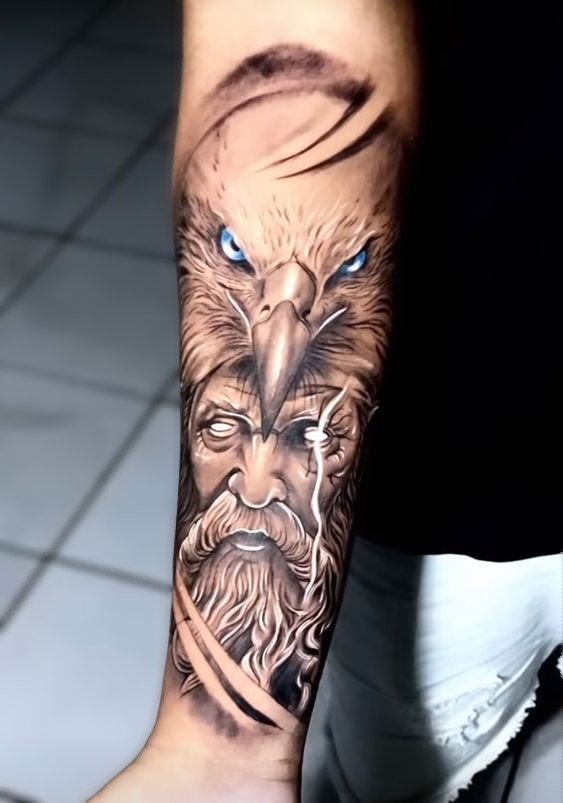
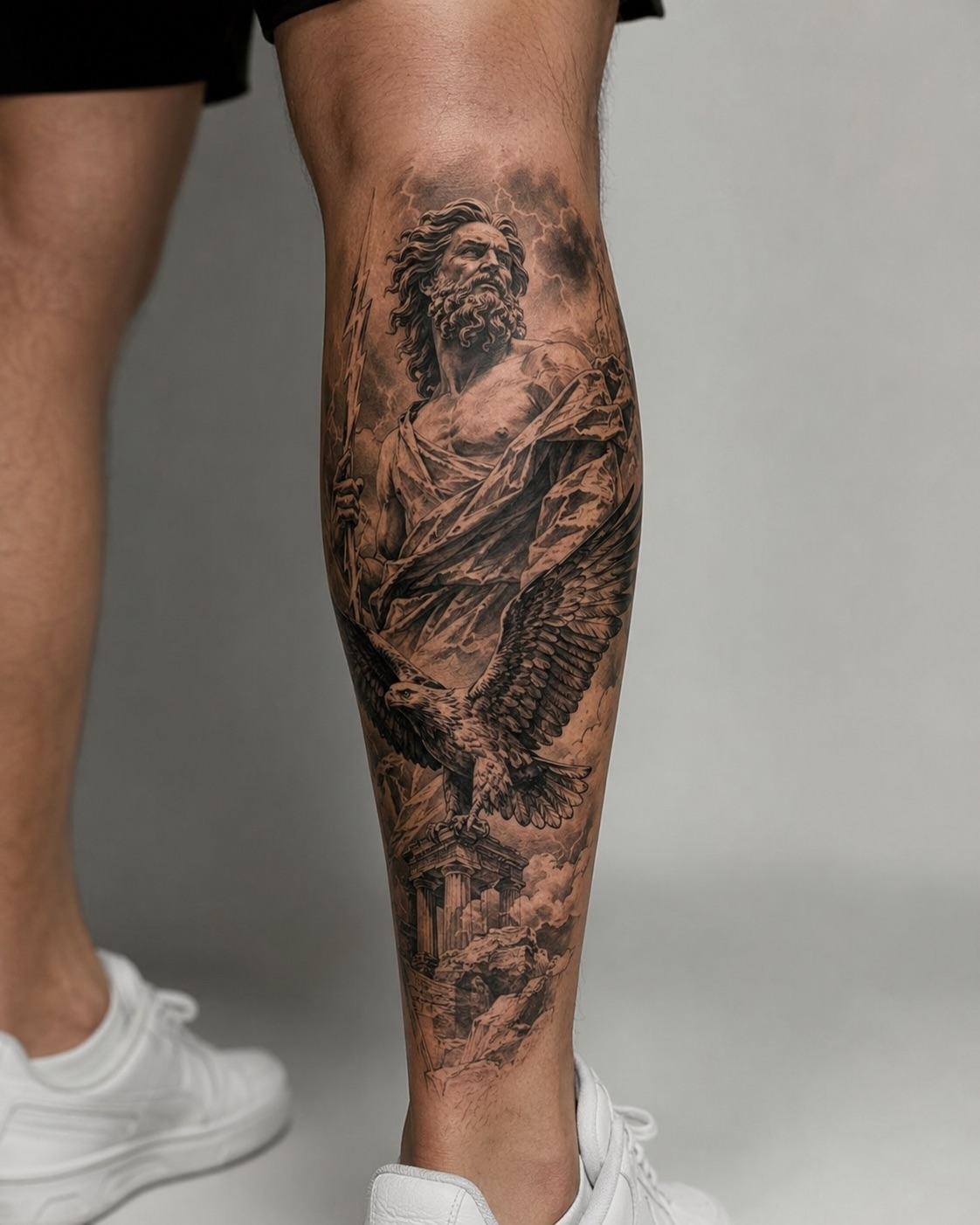
- The eagle is one of the strongest symbols connected with Zeus. It adds a feeling of height, vision and protection. Clouds, rays of light and storm details can make the design look more mythological without making it too literal.
- Greek statue style
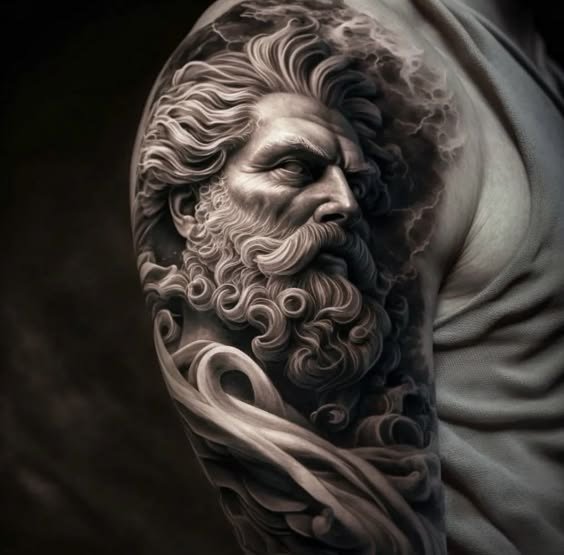
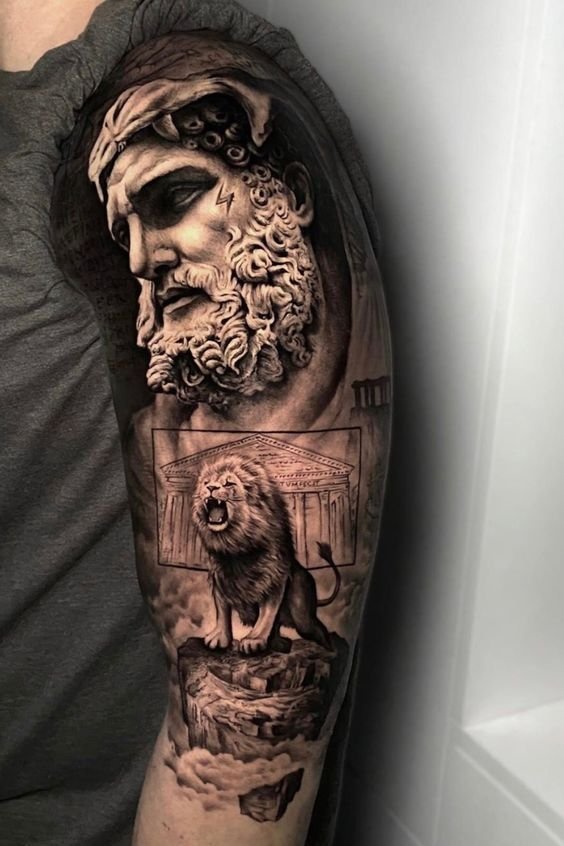
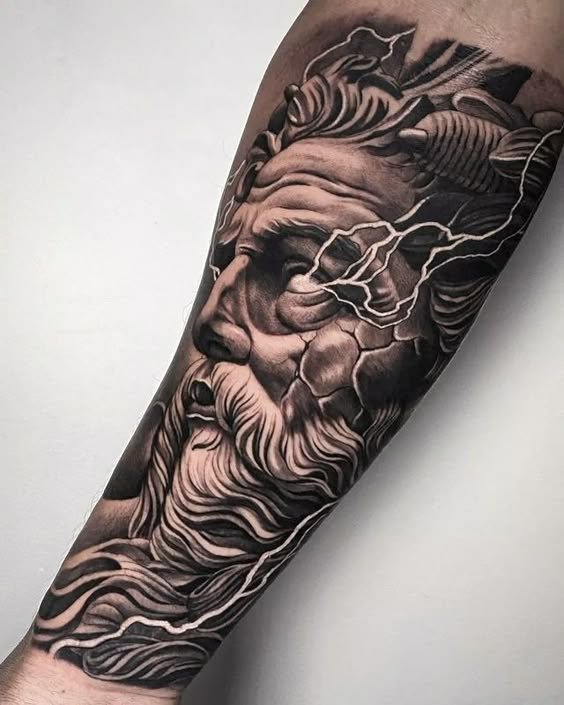
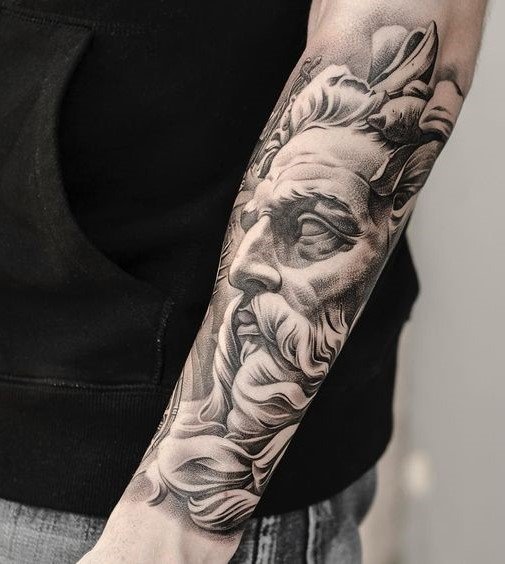
- A statue-inspired version gives the image a classical look. Cracks, stone texture and soft shadows can make the tattoo feel like a fragment of ancient sculpture. This style is a good choice if you want the motif to look timeless rather than aggressive.
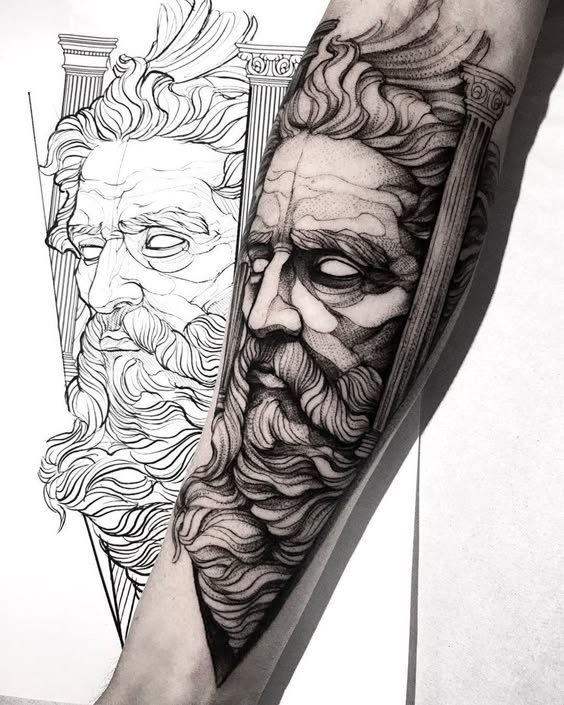
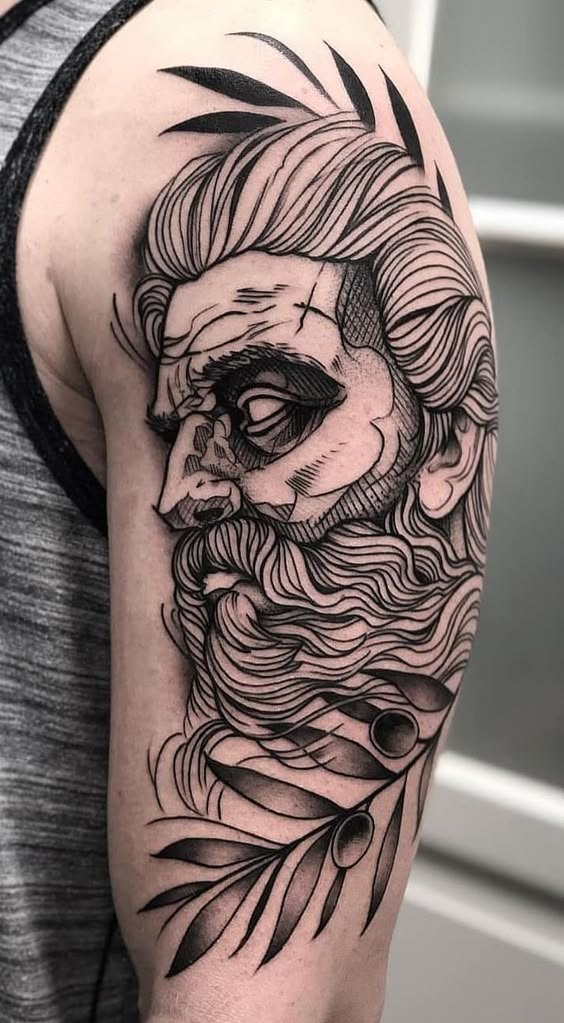
- Blackwork or graphic design
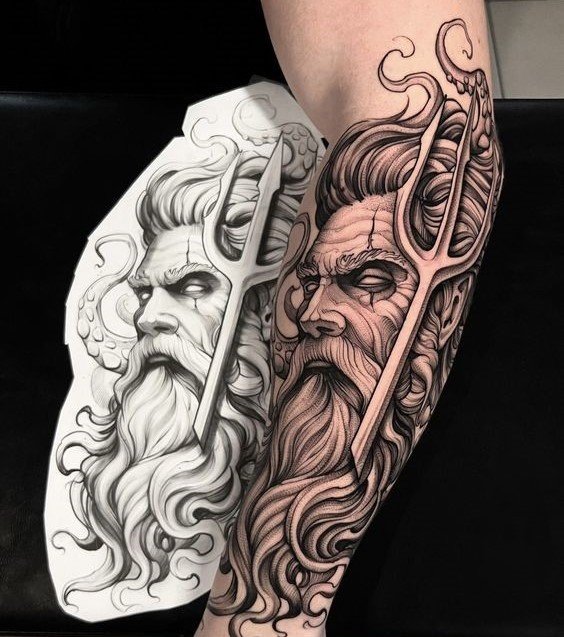
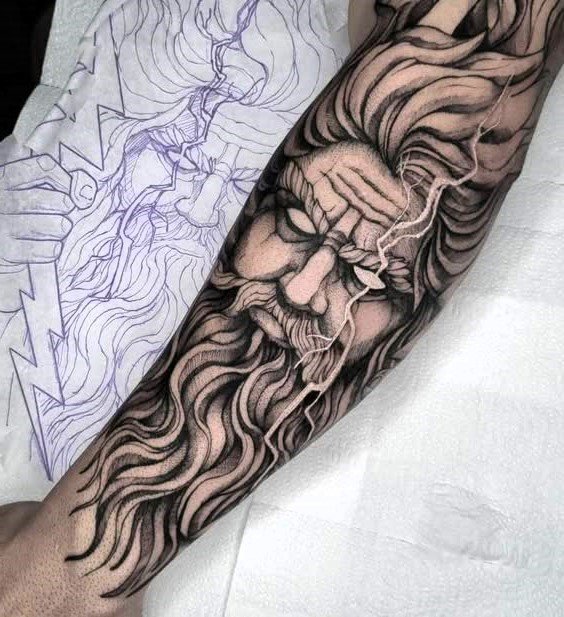
- Blackwork, engraving and graphic styles create strong contrast. They are useful when the design needs to look bold, readable and intense. This approach works especially well with lightning, deep shadows and sharp facial features.
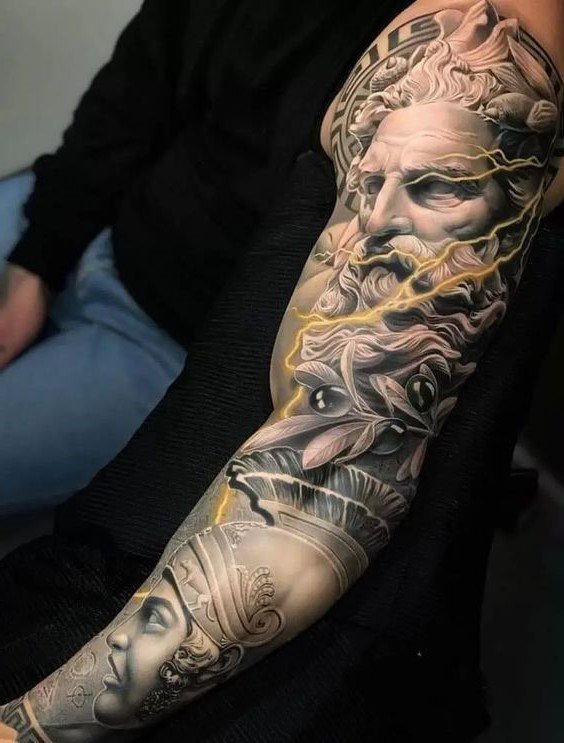
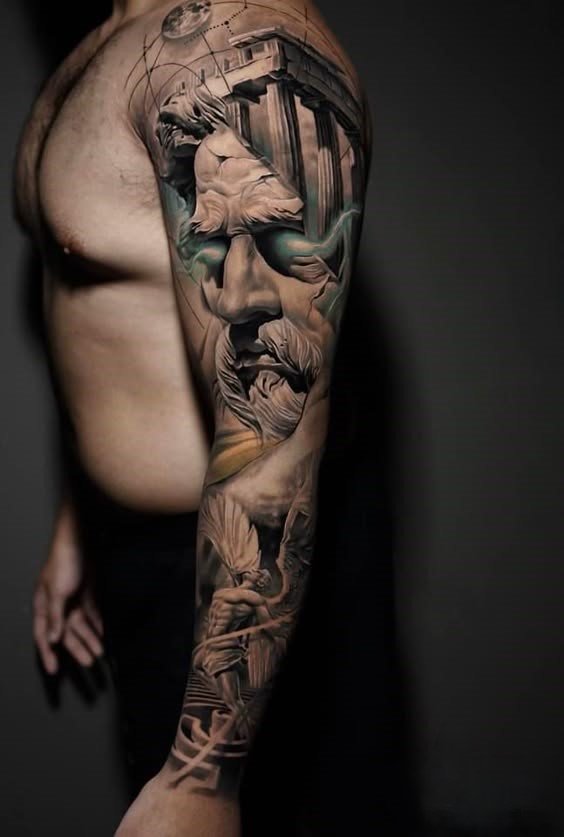
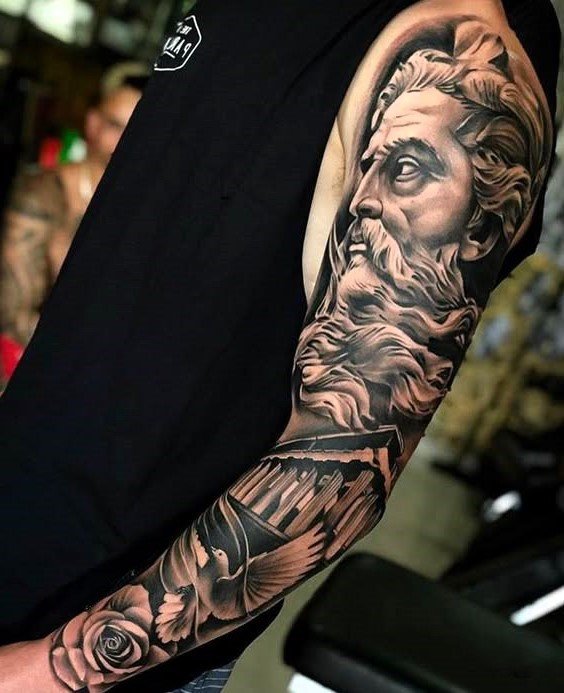
- Sleeve composition
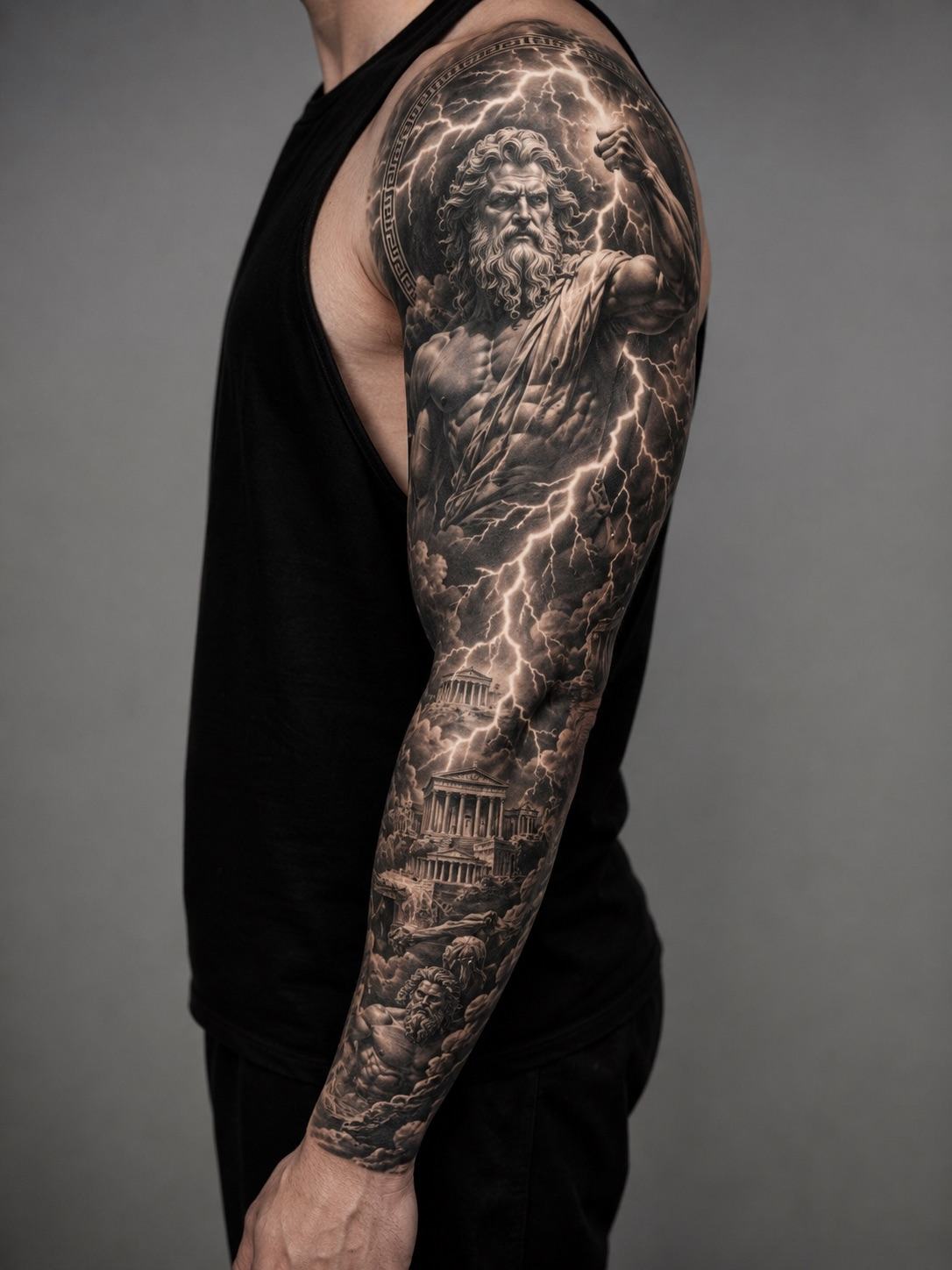
- A Zeus tattoo sleeve can include a larger mythological scene. The portrait may be combined with lightning, an eagle, clouds, columns or other Greek elements. This format needs careful planning so that the main figure stays readable and the additional details do not compete with it.


Historical and Cultural Context
Zeus is one of the central figures of Greek mythology.
He ruled Olympus, controlled thunder and was often shown as a mature, powerful figure with a strong presence. His image appeared in sculpture, painting and literature, which is why it still feels visually familiar today.
For tattoo design, this background matters because the symbol carries more than one idea. It can represent power, but also law, order, protection and judgment. The mythological context gives the image depth and prevents it from becoming just another portrait of a strong man.
A good design does not need to retell every myth connected with Zeus. It only needs to capture the right mood:
- storm;
- authority;
- ancient culture;
- divine presence;
- controlled force;
- connection with sky and thunder.
Details such as lightning, an eagle or temple fragments help make this connection clear.


Best Places for This Design
Placement depends on the size and amount of detail in the sketch.
A detailed face, strong shadows and additional elements need enough space to stay clear over time.
Recommended placements:
- Back or chest
These areas are suitable for large portraits or complex compositions. They allow the artist to show facial expression, lightning, clouds and background details without making the image too crowded. - Shoulder and upper arm
These zones work well for medium-sized designs. A portrait with lightning or an eagle can follow the natural shape of the body and still remain readable. - Forearm
A Zeus forearm tattoo is a good option when the composition is vertical. The face, lightning or a smaller figure can be placed along the arm, creating a strong visual line. - Sleeve
A sleeve is better for a full mythological scene. It can include the main portrait, storm elements, Greek columns and other details, but the composition should be planned as one piece rather than a set of separate symbols. - Thigh or leg
These areas can work for larger designs, especially if the sketch includes architecture, clouds or a statue-inspired figure.


What to Consider Before
Choosing a Sketch
Before choosing the final design, decide what should be the main focus.
If you want the tattoo to feel powerful and direct, a portrait with lightning may be the best option. If you prefer something calmer and more artistic, a Greek statue style can look more refined.
Pay attention to:
- Main visual element
- Choose whether the focus should be the face, lightning, eagle, statue effect or full mythological scene.
- Level of detail
- A small tattoo should not include too many elements, because facial features and background details can lose clarity.
- Style
- Realism gives the image depth. Blackwork adds intensity. Graphic lines make the design sharper. A classical approach creates a more historical and timeless feeling.
- Readability over time
- A strong sketch should be clear from a normal distance. Large facial features, balanced shadows and readable lightning shapes usually work better than tiny decorative details.


What to Consider Before Choosing a Sketch
- What does a Zeus tattoo mean?
- It usually represents authority, power, justice, protection and control. The exact meaning depends on the design details, such as lightning, an eagle, clouds or a statue-inspired portrait.
- Is Zeus a good tattoo idea?
- Yes. This motif works well if you want a strong mythological image with a clear visual identity. It can look dramatic, classical, realistic or graphic depending on the chosen style.
- What elements can be added to the sketch?
- Common elements include lightning, an eagle, storm clouds, Greek columns, rays of light, temple details or stone texture. The best design does not need all of them at once.
- Where does this tattoo look best?
- Detailed versions usually work well on the upper arm, forearm, chest, back, thigh or sleeve. Smaller designs should use fewer details so the image stays clear.
- Can this motif be used for a sleeve?
- Yes. A sleeve gives enough space for a full mythological composition with a portrait, lightning, clouds, an eagle and Greek architectural elements.
Sketches and Gallery
Sketches with this mythological figure can look realistic, classical, graphic or dark depending on the chosen style. In the gallery, pay attention to the expression of the face, the shape of the lightning, the use of shadows and the balance between the main figure and additional details. A large portrait feels powerful and monumental, while a smaller symbolic design can focus on lightning, an eagle or a statue fragment. Use the sketches as inspiration, but adapt the final idea to your placement, size and preferred visual mood.