Buddha Tattoo: Meaning, Ideas and Sketches
 Anna van Dijk
A Buddha tattoo is usually chosen for its calm visual presence and the meaning connected with the image.
It can refer to inner peace, wisdom, meditation, compassion, spiritual growth or the search for balance.
Before choosing a sketch, it is worth thinking about more than the face of Buddha itself. Style, placement, size, details and cultural respect all influence how the final tattoo will be read. A calm portrait, a meditation pose, lotus flowers, mandala elements or a smaller idea for the hand or forearm can create very different impressions.
In this article, we look at the meaning behind this motif, popular design directions, symbolic elements and respectful placement choices that can help turn the image into a thoughtful tattoo rather than just a decorative picture.

 Create a sketch in the VEAN TATTOO AI generator

Symbolism and Inner Meaning
Buddha tattoo meaning is usually connected with calmness, awareness and the search for inner balance.
The image often reflects Buddhist philosophy, but in tattoo form it should be treated carefully, because Buddha is a sacred figure for many people.
Common meanings include:
- Enlightenment and wisdom - the image can represent knowledge, self-reflection and the wish to grow spiritually.
- Peace and inner harmony - a calm face, closed eyes or meditation pose often suggests balance, silence and emotional control.
- Compassion and kindness - Buddha is strongly associated with empathy, patience and respect for living beings.
- Mindfulness and self-discipline - the motif can remind the wearer to stay present, act consciously and avoid impulsive decisions.
- Spiritual guidance - for some people, the design reflects a personal path, moral values or the search for clarity rather than simple decoration.
The final meaning depends on the composition. A Buddha portrait, lotus flower, mandala, halo, temple detail or meditation pose can shift the mood of the tattoo and make the symbolism softer, deeper or more visually expressive.


Design Ideas and Visual Directions
Buddha tattoo ideas can range from calm minimalist sketches to large detailed compositions with lotus flowers, mandalas, temple elements or soft shading.
The best direction depends on the size, placement and how clearly you want the spiritual mood to be visible.
Common options include:
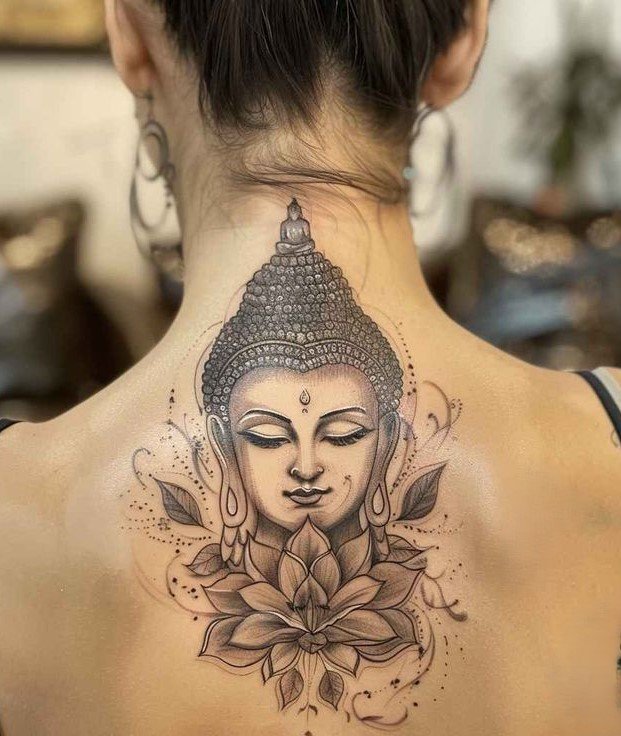
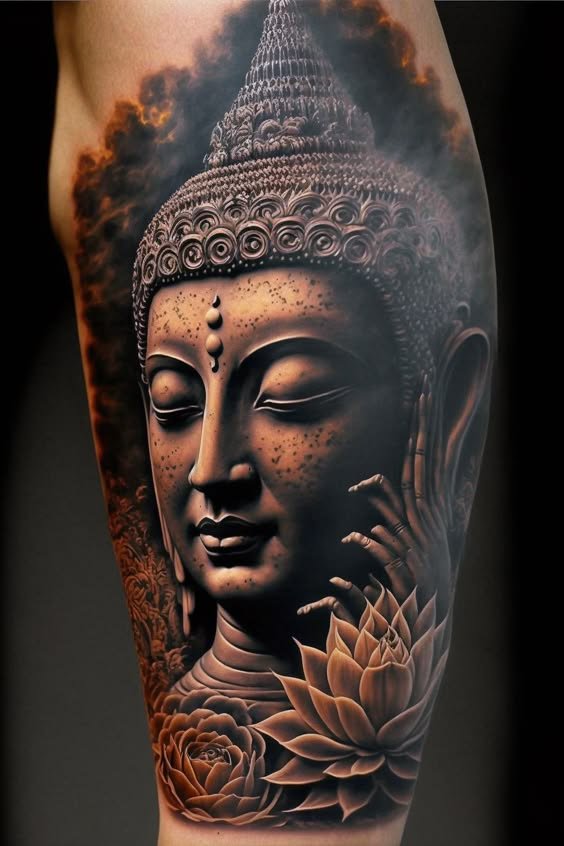
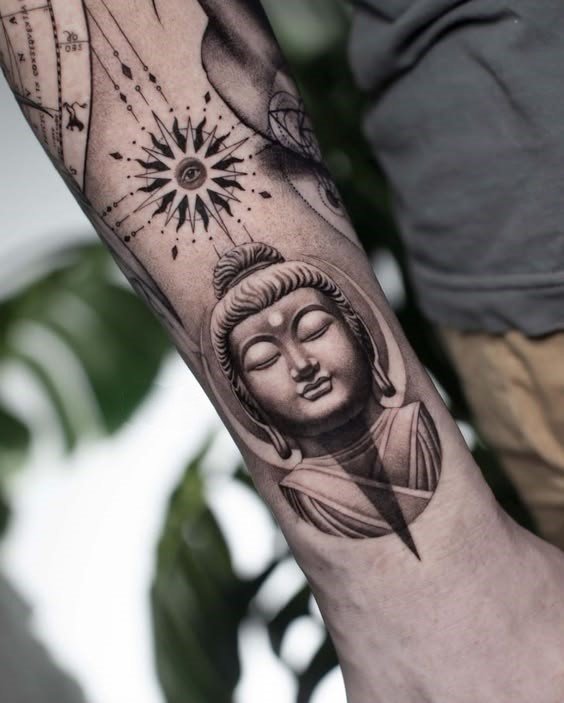
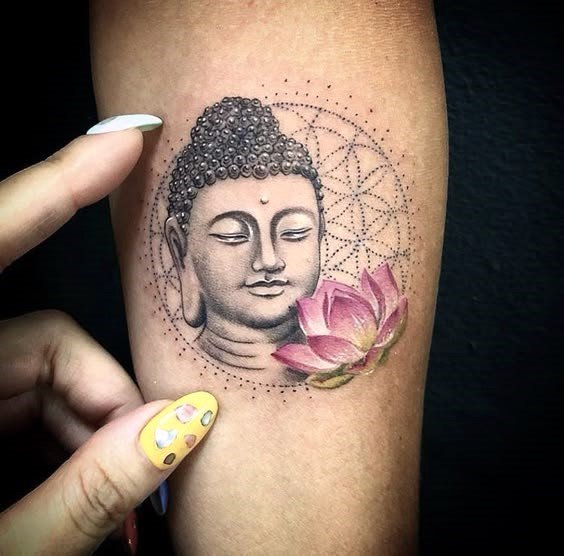
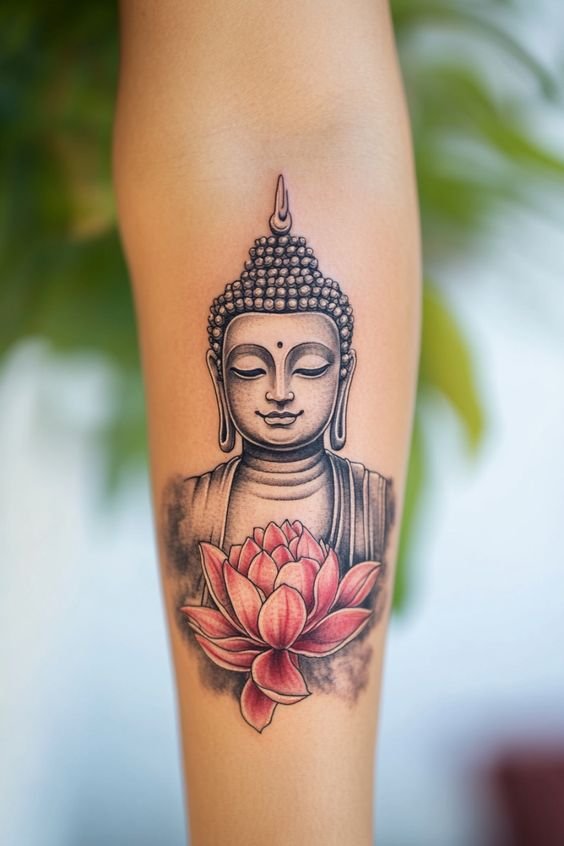
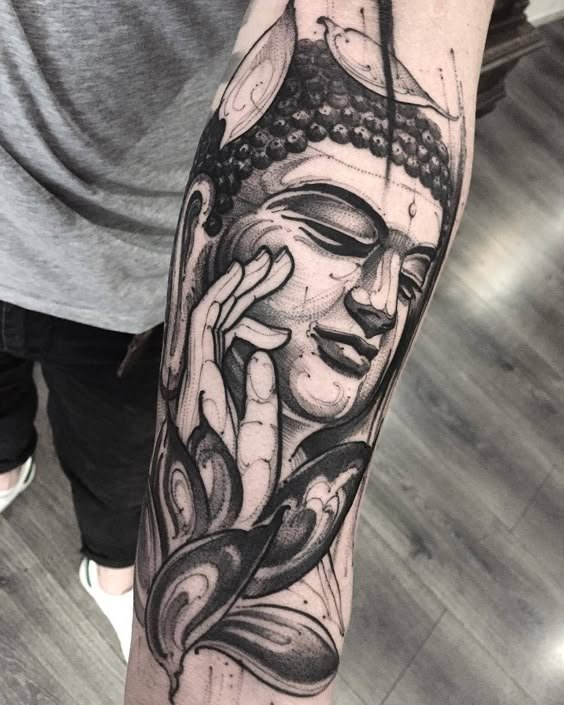
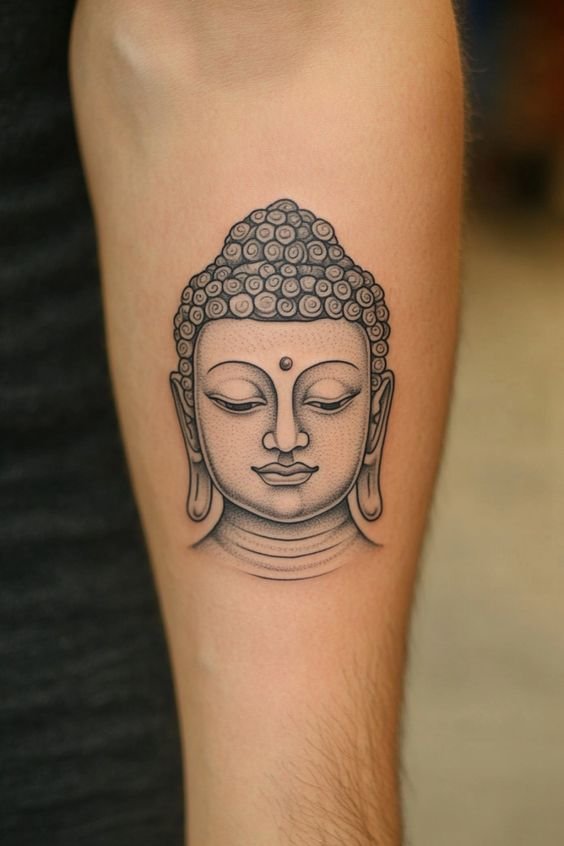
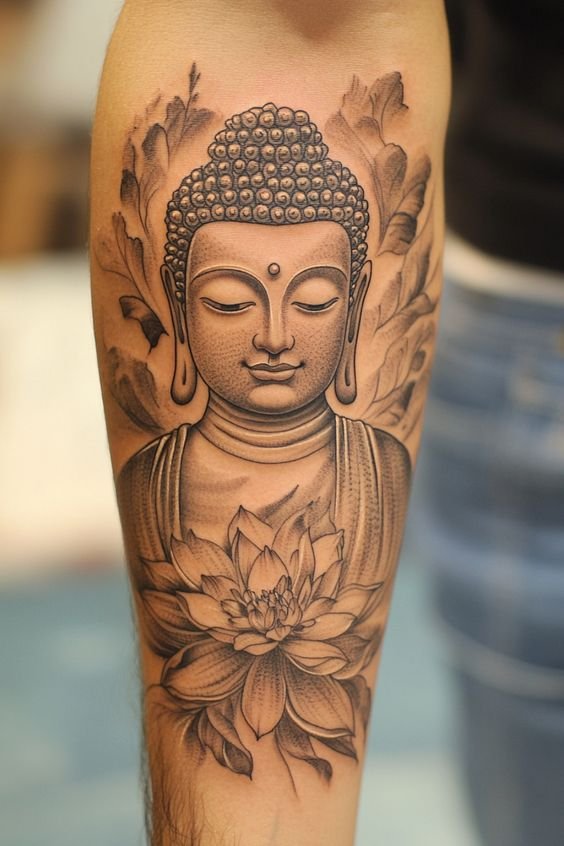
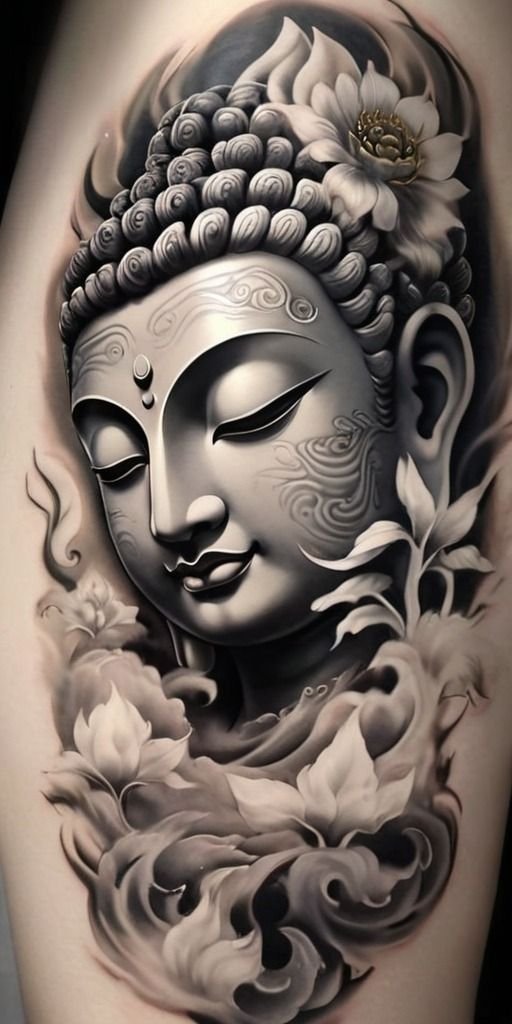
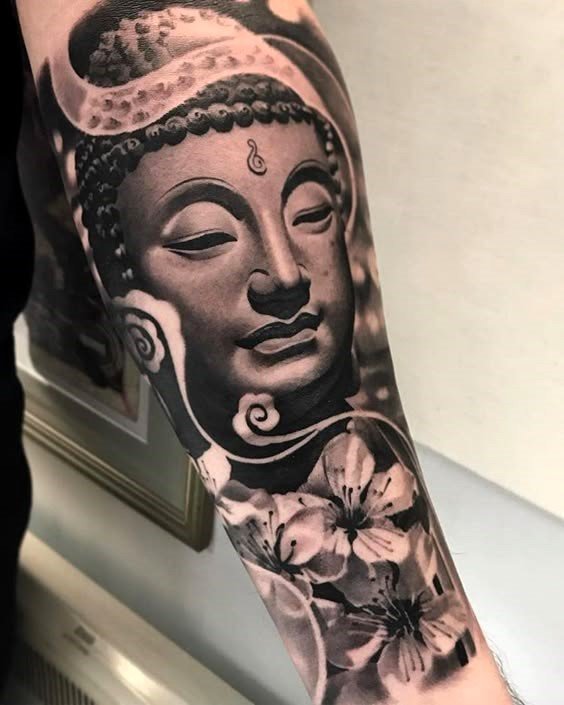
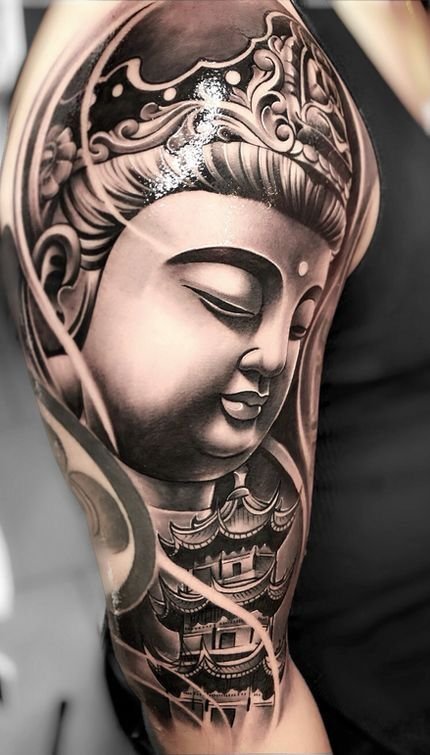
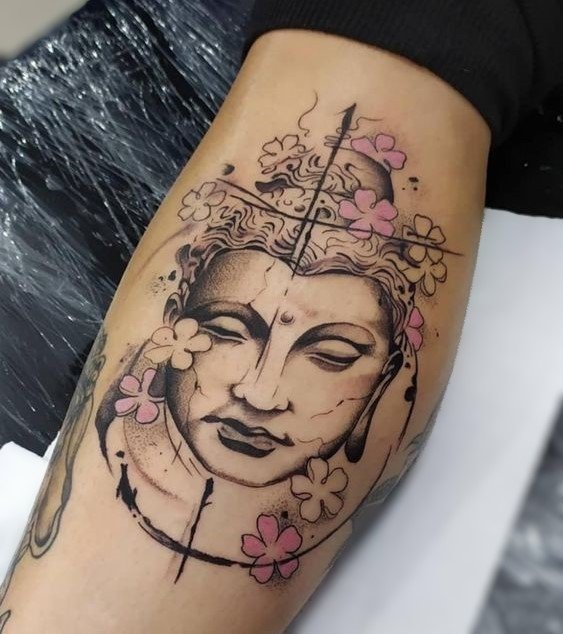
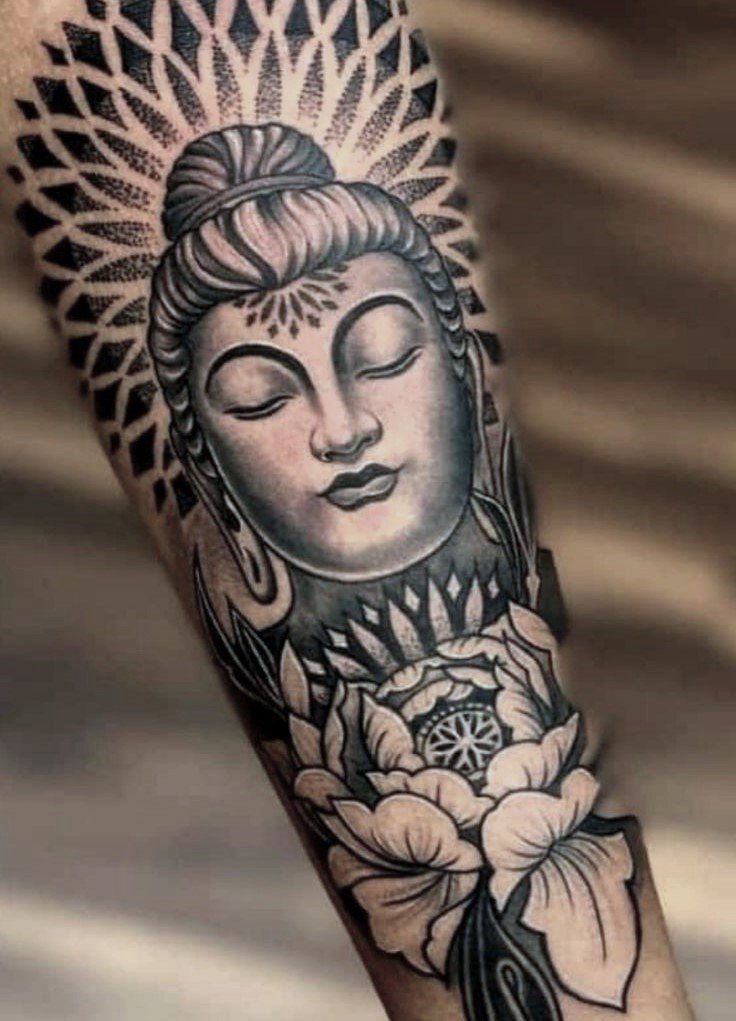
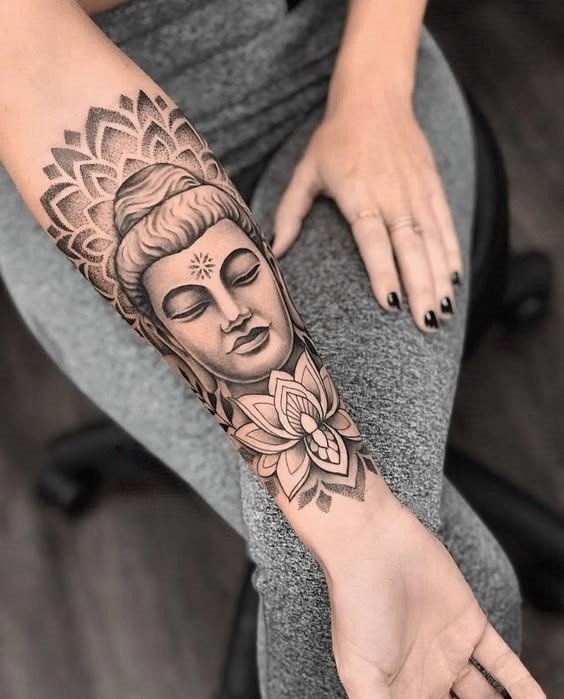
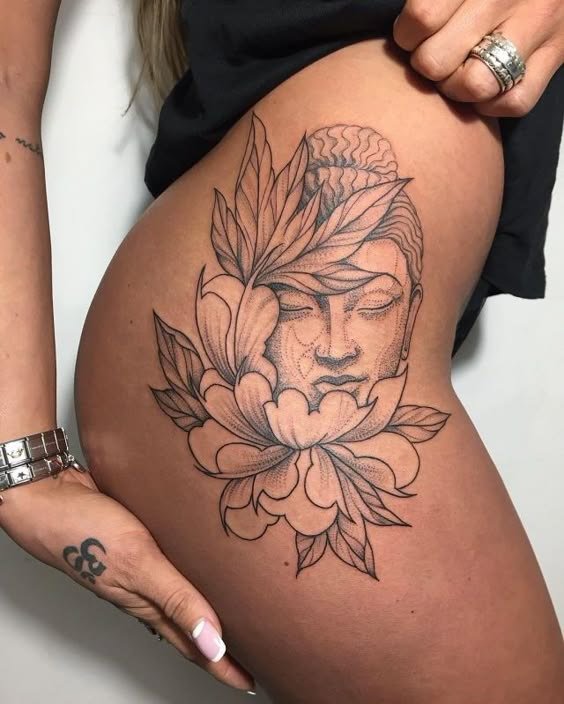
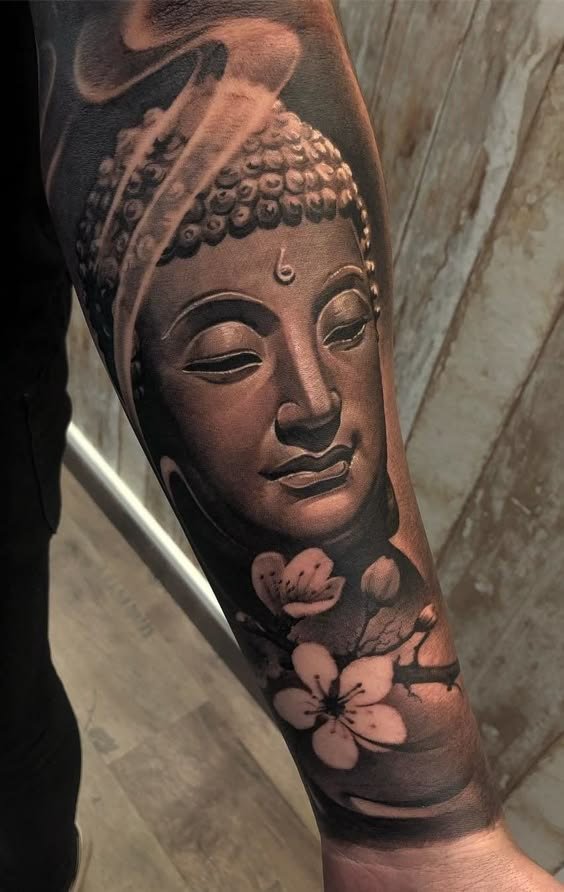
- Calm Buddha portrait - a realistic or fine-line face with closed eyes can create a quiet, meditative look. This works well when the main focus is peace, wisdom and emotional balance.
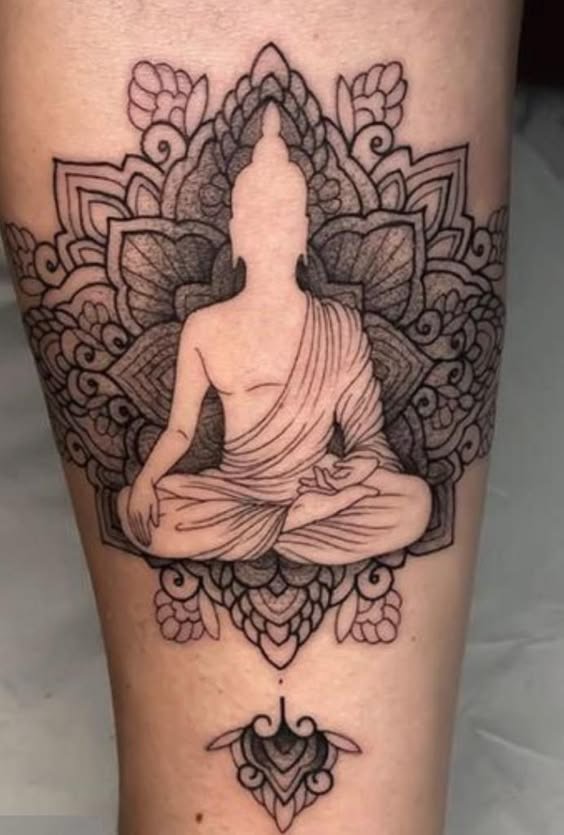
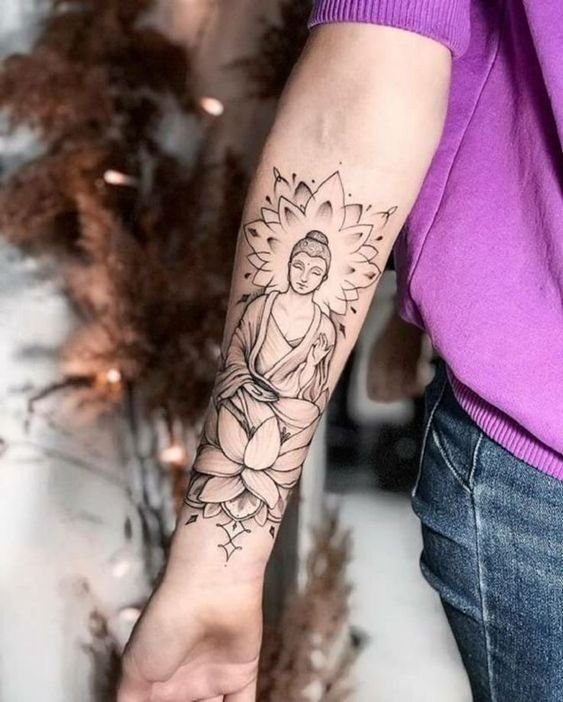
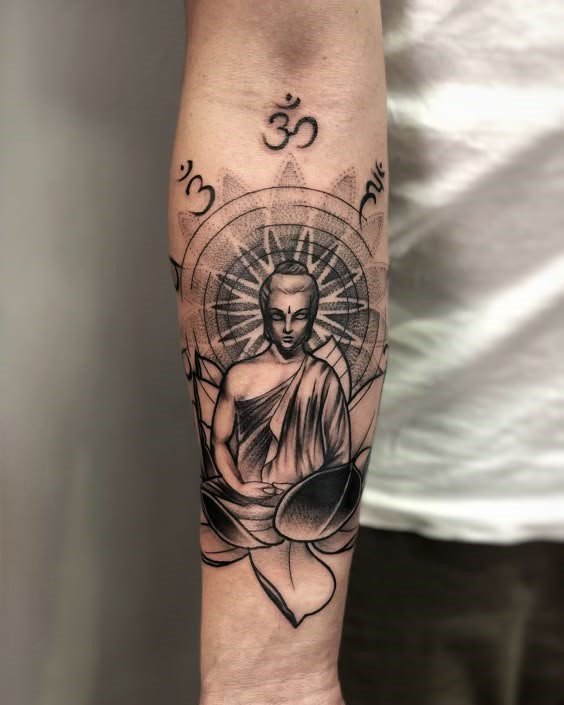
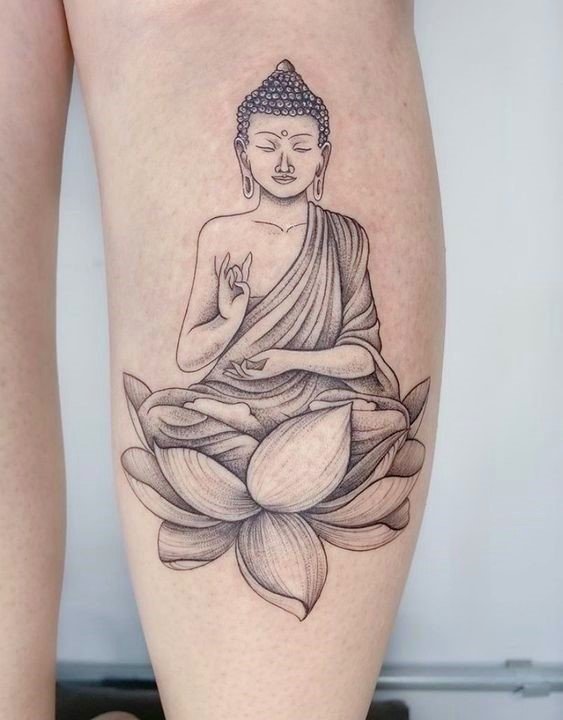
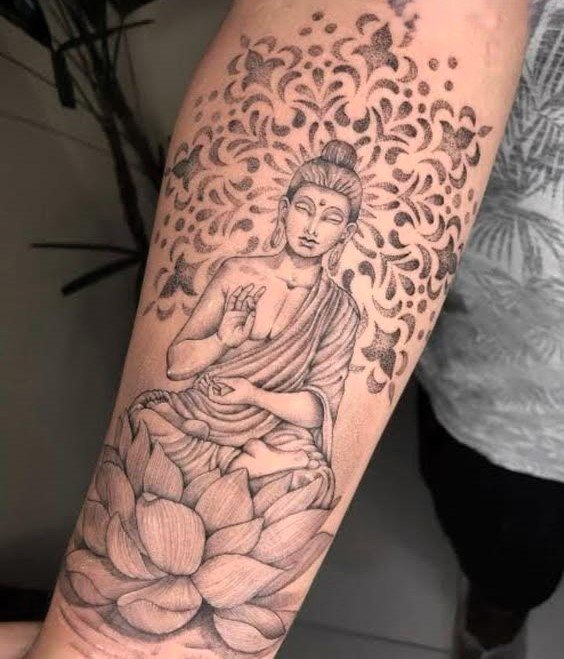
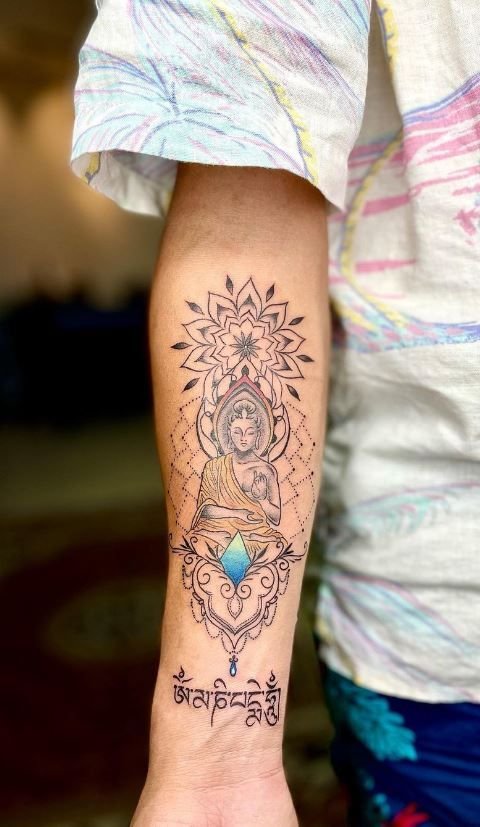
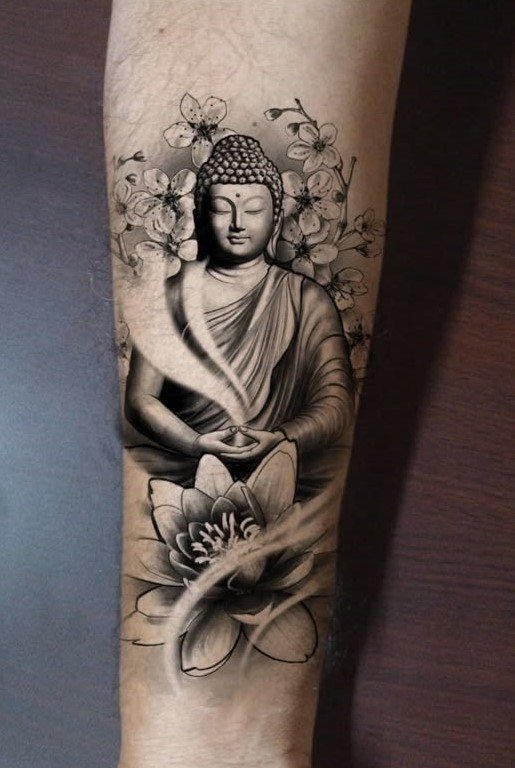
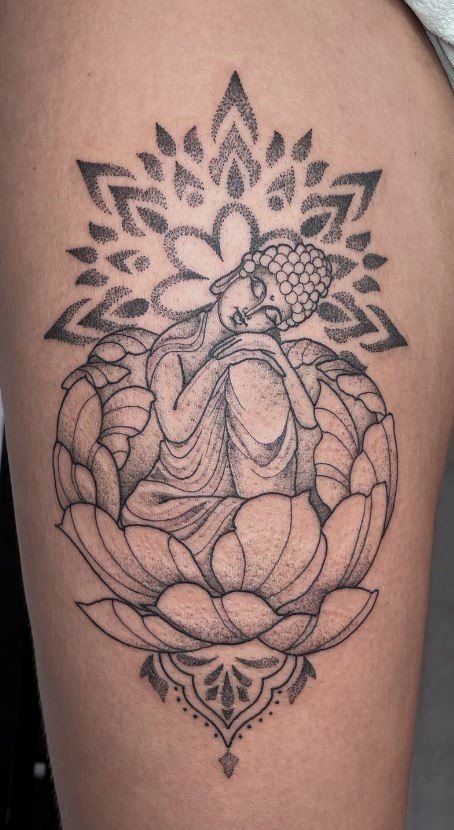
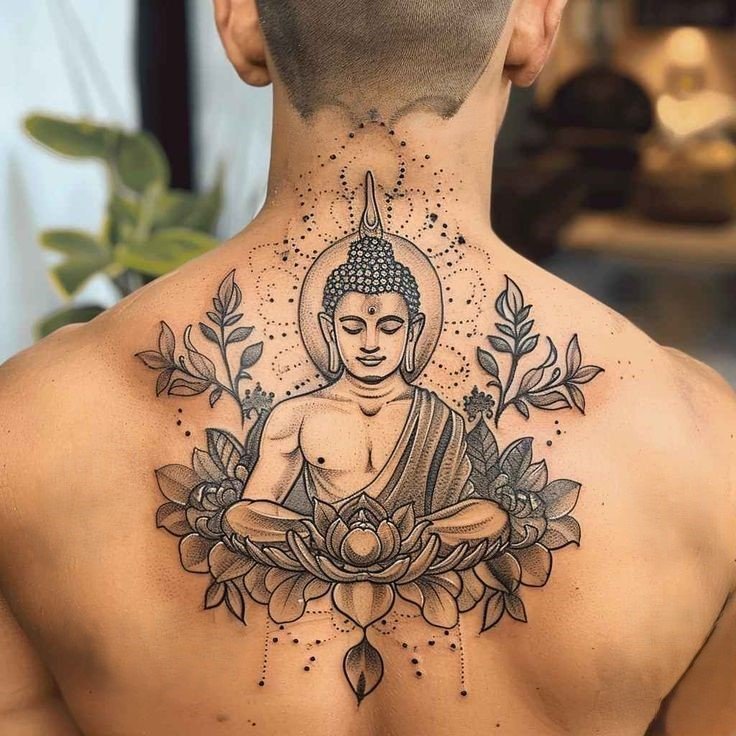
- Buddha in meditation - a seated figure in a lotus pose gives the design a stronger spiritual character. It is often chosen by people who connect the motif with mindfulness, concentration or personal growth.
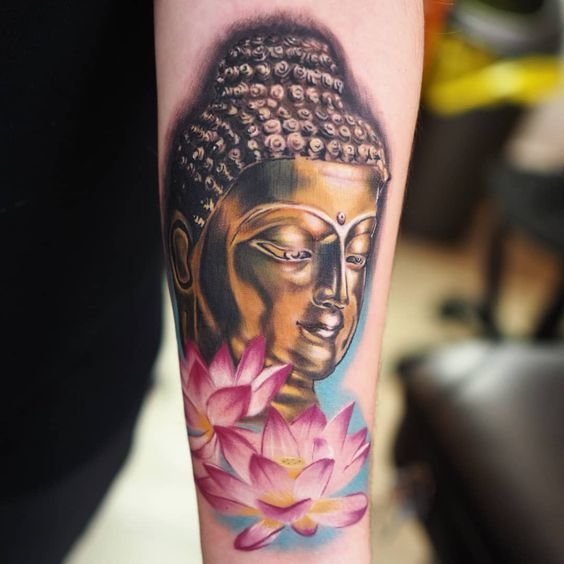
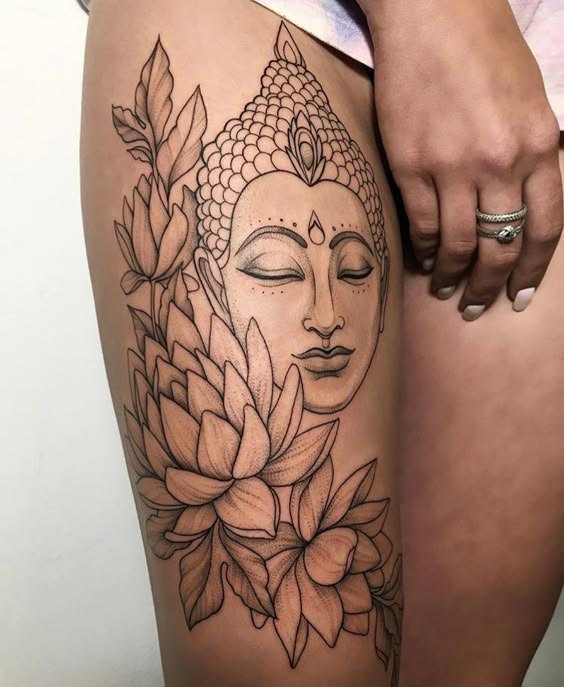
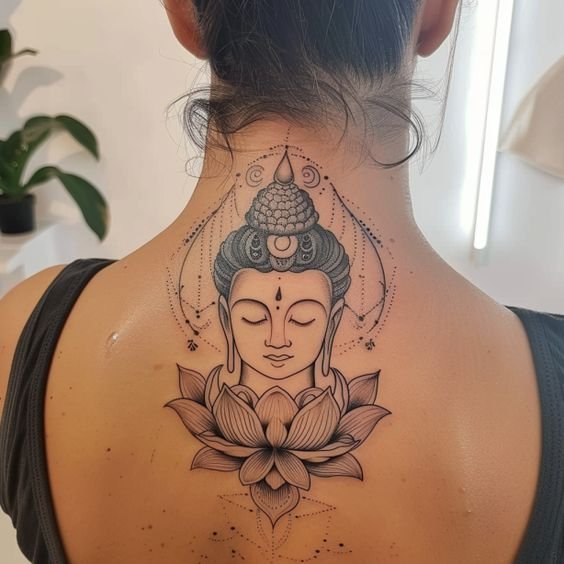
- Lotus flower details - lotus flowers can add a softer symbolic layer. They are often linked with purity, awakening and the idea of growing through difficult experiences.
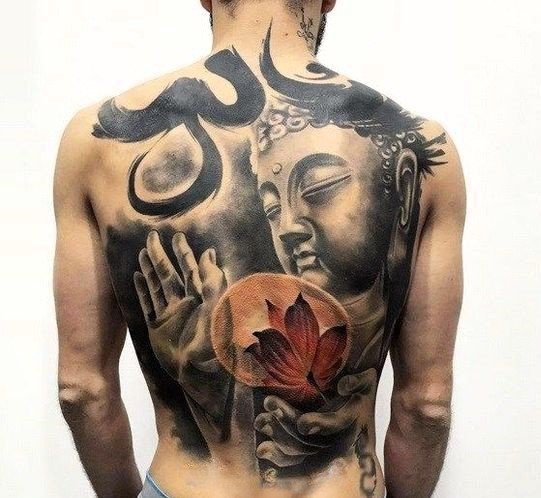
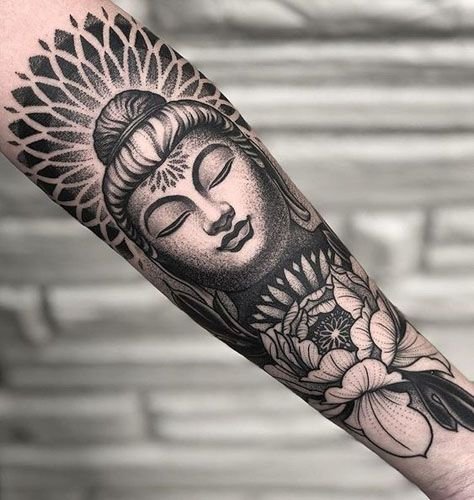
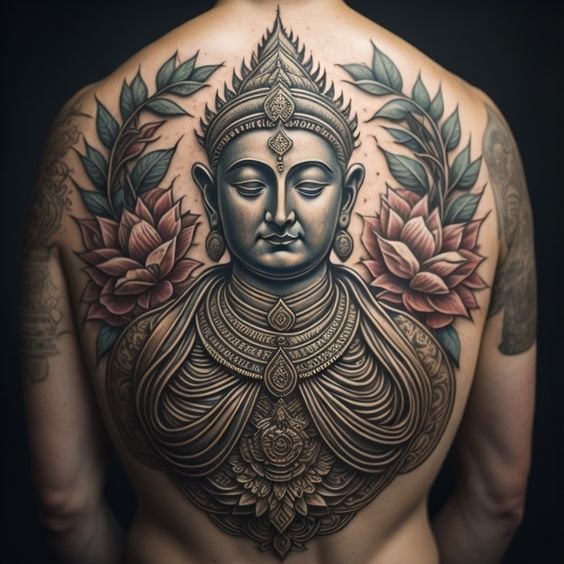
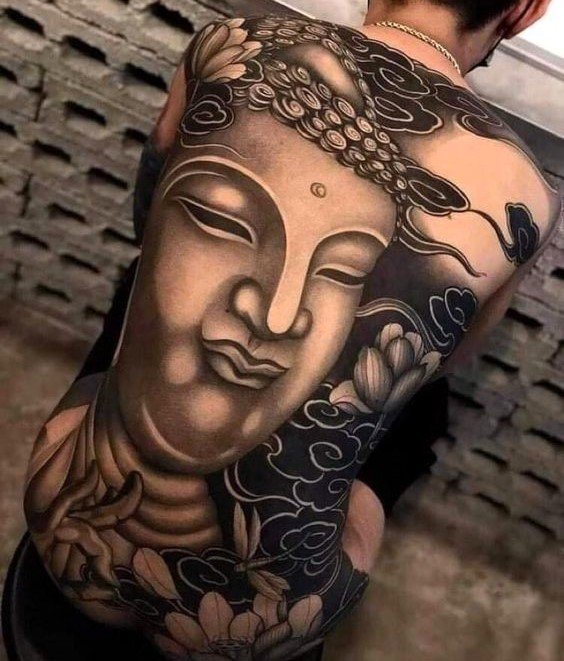
- Mandala background - a mandala can make the composition more structured and ornamental. It works especially well for larger tattoos on the back, chest, shoulder or forearm.
- Watercolor accents - soft color transitions can make the image lighter and more artistic. This style should still keep the face and main lines readable, especially if the tattoo is medium-sized.
- Minimalist sketch - a small outline, simple face, hand gesture or meditation silhouette can be a good option for those who want a more discreet design.
A strong Buddha tattoo design should not feel overloaded. If the sketch includes the face, lotus, mandala and background details at the same time, the composition needs enough space so the image stays clear on the skin.


Placement, Scale and Readability
A Buddha tattoo on hand can look expressive, but this placement needs a very clear and simplified sketch.
The hand has limited space, so a small face, meditation outline, lotus detail or symbolic element usually works better than a complex full figure. Fine details should be reduced, otherwise the image may lose clarity over time.
A Buddha forearm tattoo gives more room for a balanced composition. The forearm works well for a calm portrait, seated figure, lotus flowers, mandala elements or soft shading, especially when the design follows the natural line of the arm. This area also keeps the image visible without forcing it into a very small format.
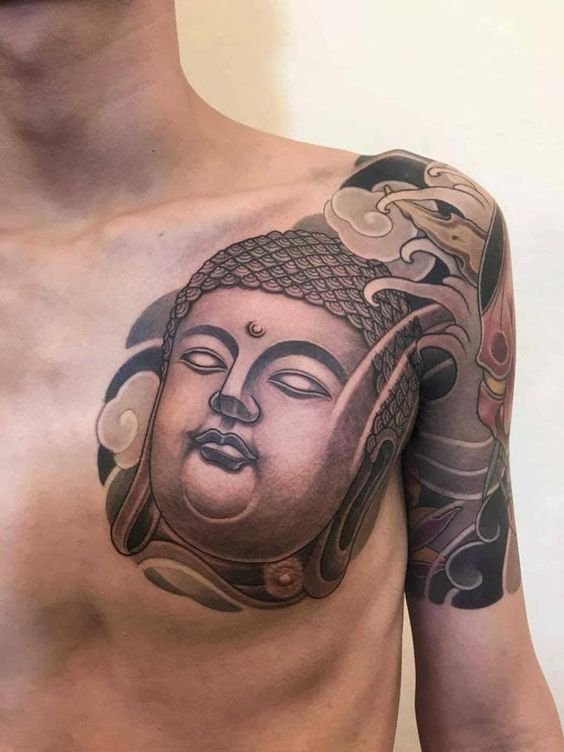
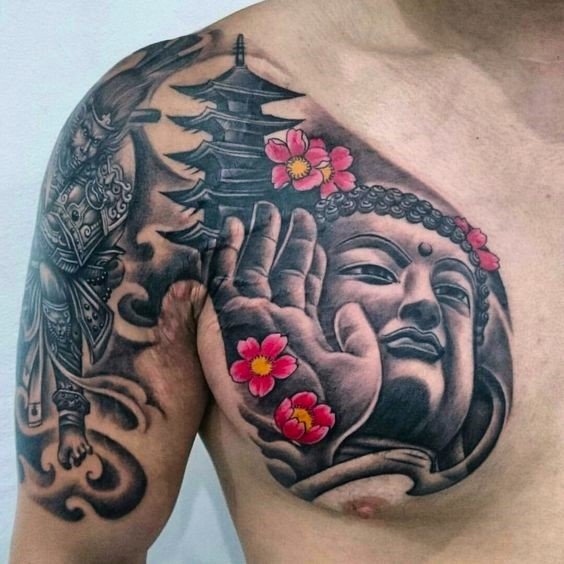
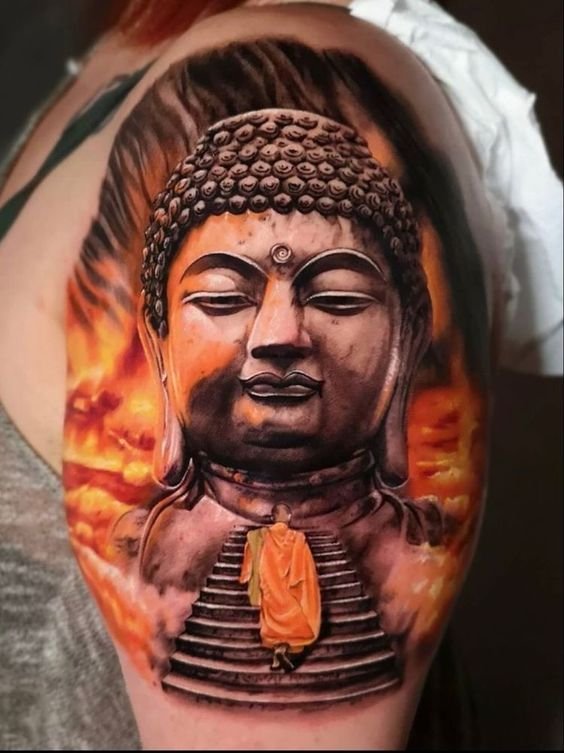
For a larger arm design, the shoulder, upper arm or sleeve can hold more symbolic details. Rays, temple elements, geometric patterns, clouds or floral accents can be added more naturally when there is enough space around the main image.
The chest and back are better for complex compositions. These areas allow the artist to build a calmer visual story with a central figure, background elements and enough negative space between details.
Before choosing the final sketch, consider visibility, size and aging of the lines. A small hand tattoo needs fewer elements, while the forearm, upper arm, chest or back can support more detail and still stay clear on the skin.


Cultural Respect and Responsible Use
A Buddhist tattoo should not be chosen only because it looks calm or exotic.
Buddha is a sacred figure for many people, so the image can be perceived differently depending on placement, style and how thoughtfully the design is used.
Respectful use starts with understanding the symbol. If the sketch includes Buddha’s face, meditation pose, mudra, lotus, temple detail or other sacred elements, it is worth knowing what they represent before adding them to the tattoo.
Placement also matters. Very low body placements or areas where the image may look careless can be seen as disrespectful, especially when the tattoo shows Buddha’s face or full figure. A clean, thoughtful area usually works better for this type of design.
The style should support the meaning rather than distort it. Aggressive, ironic or random combinations can weaken the idea and make the tattoo look careless. A calm expression, balanced composition and well-chosen details usually create a more respectful result.
Respect does not mean the sketch has to look old-fashioned. It means the image should be designed with care, placed thoughtfully and adapted in a way that keeps its cultural and spiritual weight.


FAQ
- What Does a Buddha Tattoo Mean?
- The meaning is usually connected with peace, wisdom, meditation, compassion and spiritual growth. The final interpretation depends on the pose, facial expression, added symbols, placement and personal reason behind the tattoo.
- What Is the Meaning of Buddha Tattoo Designs with Lotus Flowers?
- Lotus flowers often add the idea of purity, awakening and growth. In a tattoo, they can make the image softer and connect the design with transformation, patience and inner development.
- What Does a Female Buddha Tattoo Mean?
- In tattoo searches, female Buddha tattoo meaning usually refers to a softer, more delicate or feminine-style interpretation of the image. The meaning is not fixed by gender; it depends more on expression, details, posture and the personal idea behind the design.
- Is a Buddha Hand Tattoo a Good Idea?
- A hand placement can work, but only for a simplified design. A small face, lotus, outline or symbolic detail usually reads better than a complex full figure. Because the hand is very visible, the sketch should be clear and respectful.
- What Is the Best Placement for This Design?
- Forearm, upper arm, shoulder, chest and back usually give more space for detail. Smaller placements can work for minimal designs, but the image should not be compressed too much.
- Can Buddha Be Combined with Mandala or Temple Details?
- Yes, if the composition stays balanced. Mandala, temple elements, rays or lotus flowers can support the central image, but too many details can make the sketch hard to read.
- Is It Disrespectful to Get This Tattoo?
- It depends on the design, placement and attitude toward the image. A thoughtful sketch with respectful placement and clear understanding is very different from using the image as a random decorative trend.


Buddha Tattoo Sketches and Gallery
The gallery can help you compare different visual directions before choosing a final sketch.
Pay attention not only to the beauty of the reference, but also to line clarity, size, placement and how the main image works with supporting details.
Some sketches focus on a calm face, closed eyes and soft shading. Others use lotus flowers, mandalas, rays, temple details or a seated meditation pose to create a more complete composition.
Not every reference image works well as a tattoo. A design that looks impressive on screen may need to be simplified, enlarged or adapted to the body so that the face, hands and small details stay readable after healing.
Use the sketches as inspiration, not as a direct copy. At VEAN TATTOO, the artist can help adapt the chosen idea into a respectful design that fits the body, keeps the symbolism clear and looks balanced on the skin.